Heirlooms

Years ago, when we first moved to Georgetown, my Aunt Sha would comment that now that we had a house we should go get the curb stones from the old Howard place. I sort of knew what she was talking about. Thomas and Helen Melvina (Pickens) Howard came to Texas in the early 1870s and they bought what has come to be known as The Old Home Place. I still have lots of work to do on the origins of the family, as they have been elusive to this point, but once they reached this spot, they settled down and stayed for three generations and, as I recall, the 4th generation still owned it. The curbstones had lined the walkway and flower beds around the house. They had been carved by my great-great-grandfather Thomas Howard, who was a stonemason and is said to have worked on the foundations of the Texas State Capitol building. I wonder if there are any records of that anywhere?
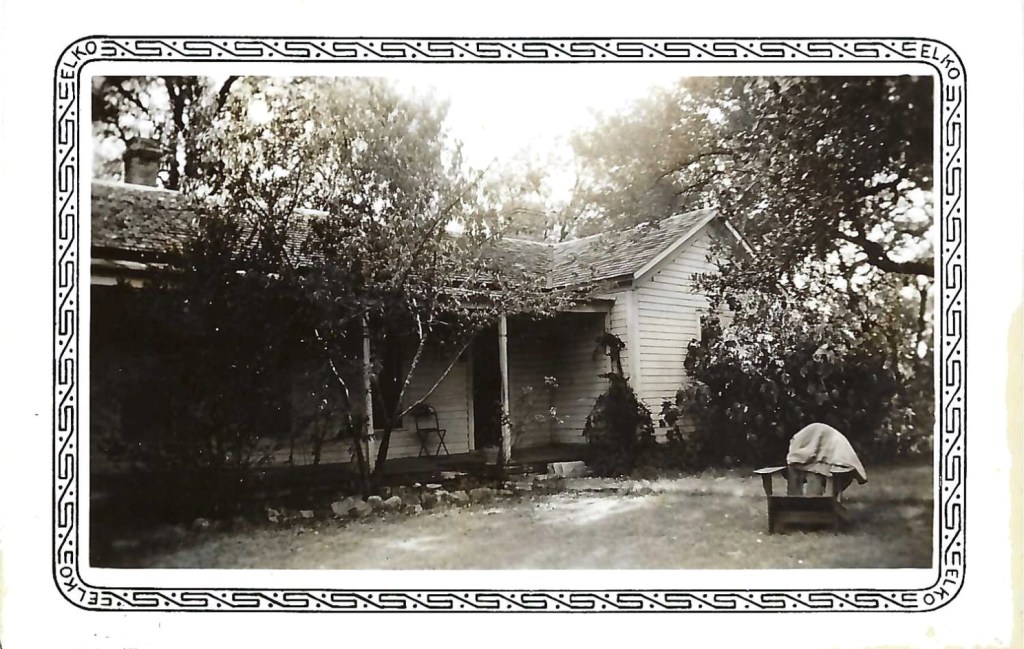
The Howard Adams Place, circa 1942.

Their original homestead was on the current Railroad Street here in Georgetown, across from The Caring Place, on the grounds of an apartment complex. The site of the original house and outbuildings has been left as green space on the corner of Railroad and 19th.

Site of the Old Howard Adams Place, taken from 19th street looking south. I think that’s the old cistern there in the foreground.

I think my aunt had finally sold the property in the early 2000s and we had kind of forgotten about the curb stones. But then one day my oft-mentioned Aunt Billye called and said she had stopped at the construction site of those apartments and had explained who she was and asked if it would be alright if we came and got some of the stones. We weren’t sure how we’d manage it, just her and Sean and I, but we rented a flatbed truck from Home Depot and drove over there. We were walking around that corner where the old house had been and Billye was pointing out the locations of things as she remembered them and we were trying to find the stones and figure out how to extract them, when a guy who had been working on another area of the property came rumbling over in a Bobcat. We explained who we were and what we were trying to do and he was really interested to find out more about the old homestead. Apparently, as they had been cleaning stuff up in that area, they had found all these intriguing things, like the old well or cistern, old chicken wire and barbed wire fencing, and the old curb stones. So we had a nice visit with him reminiscing about the old homestead and then he got in his Bobcat and started lifting up stones for us! He was one of those guys that can use a Bobcat like a precision instrument and he carefully scraped dirt off of some of them and dug under others and lifted them out of the ground so we could pick them up and get them to the truck.

They are not small things. The smallest curb stones are about 12 x 6 x 6 inches and the largest complete stone we were able to find is about 36 x 6 x 12 inches . We also found partial stones that are in between those sizes. And they are HEAVY. They must be limestone and I assume they must have come from one of the local quarries, but they are dense. I’ve hauled around limestone rocks before for gardening projects and they weren’t anything like these. Our helpful friend carried the big one over to our truck on the Bobcat because none of us could carry it that far.

And the really cool thing is you can still see the tool marks. These aren’t fancy dressed stones. They are almost utilitarian. I don’t know if Thomas worked professionally as a stonemason, other than the time he is said to have worked on the capitol. All other sources have him as a farmer. I guess I’ll have to do some more digging into his professional life, huh?

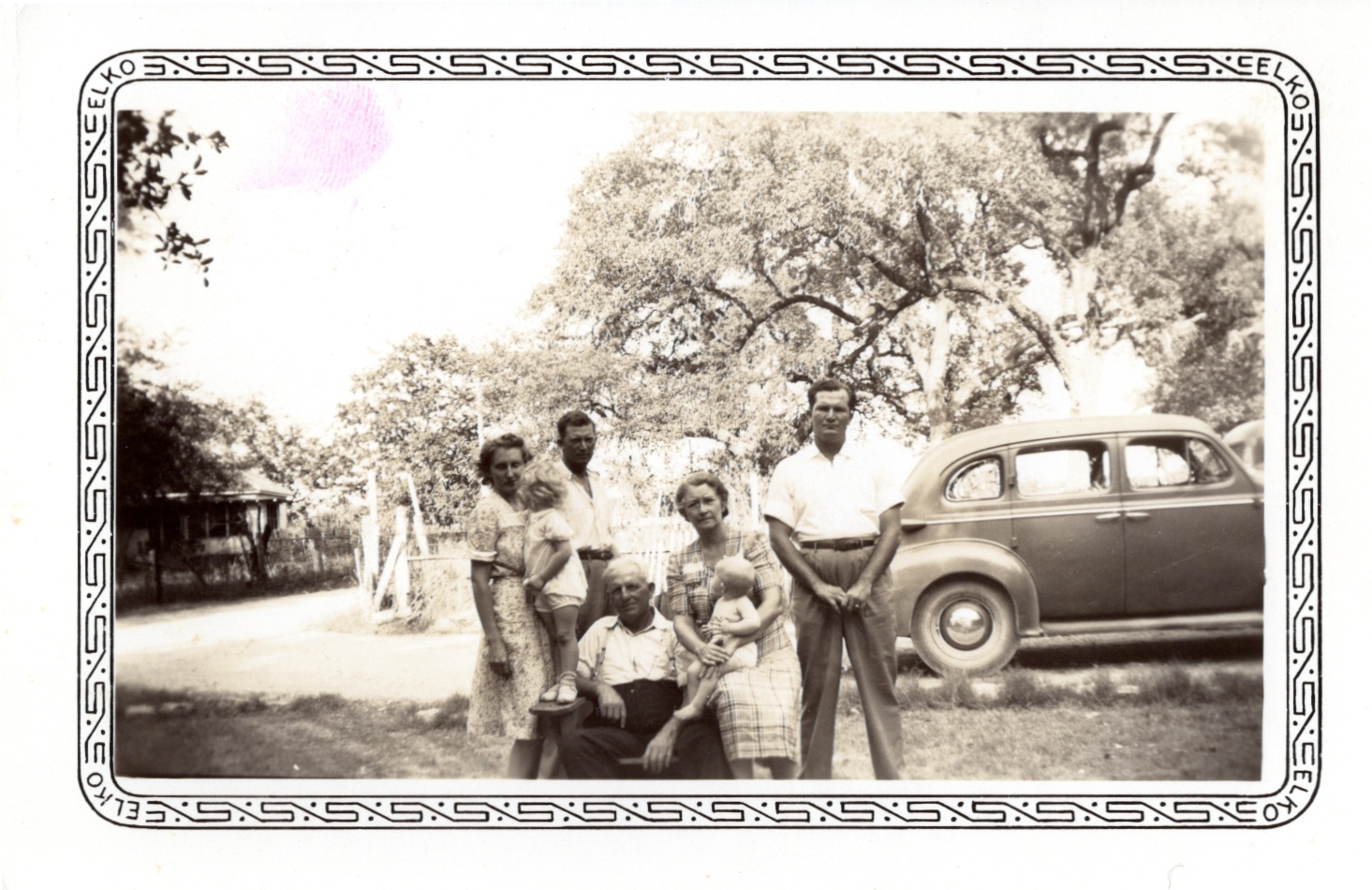
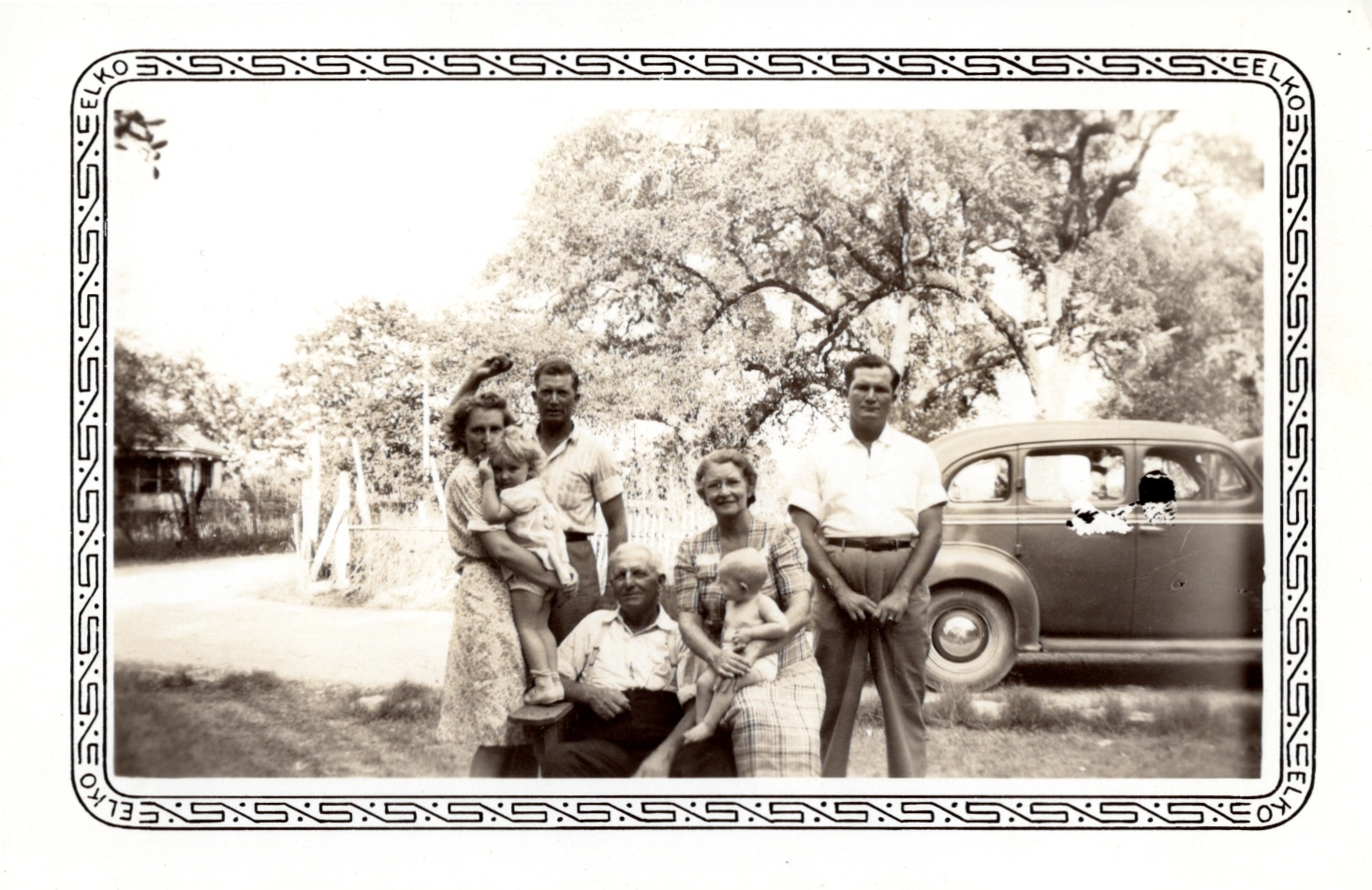
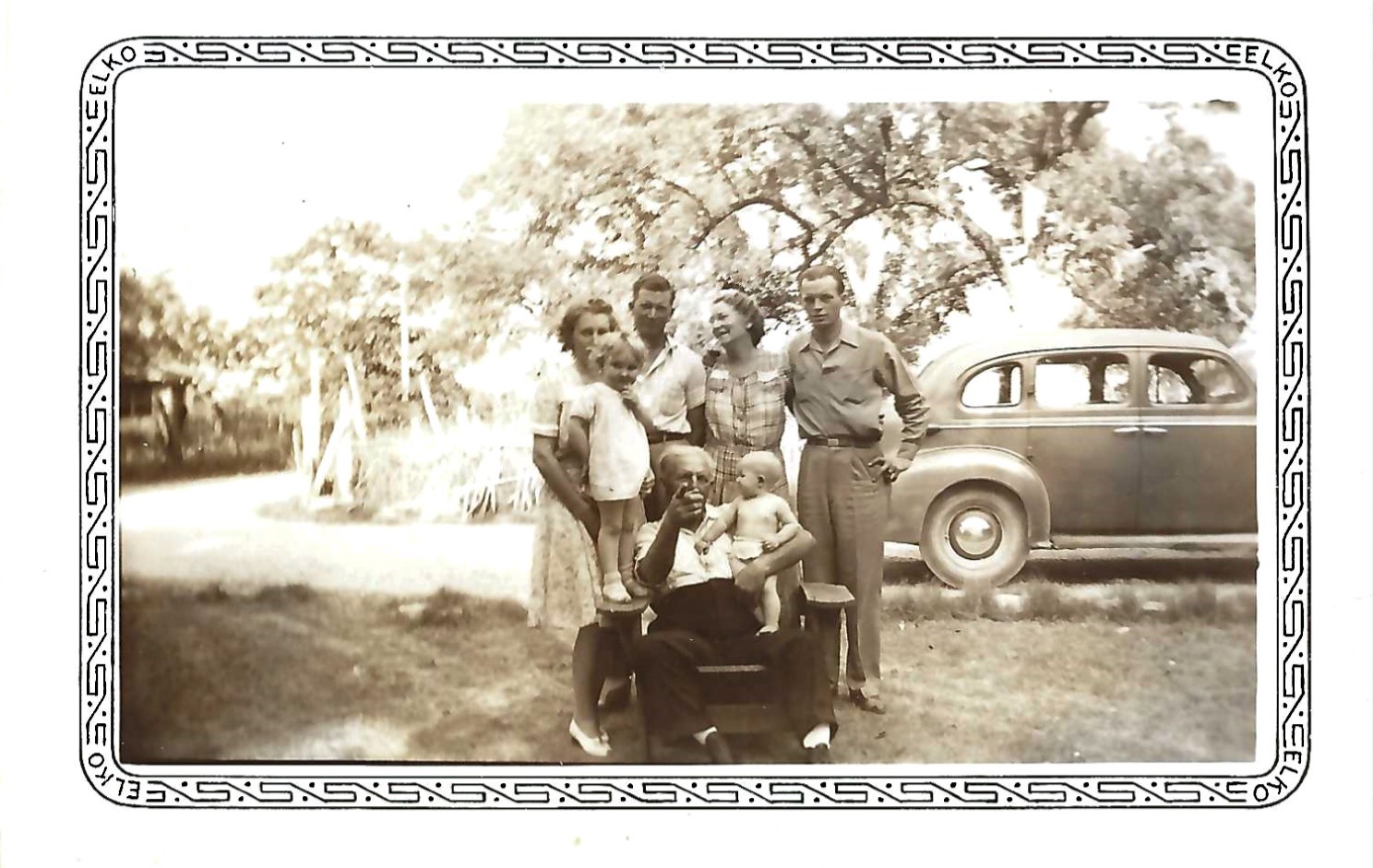
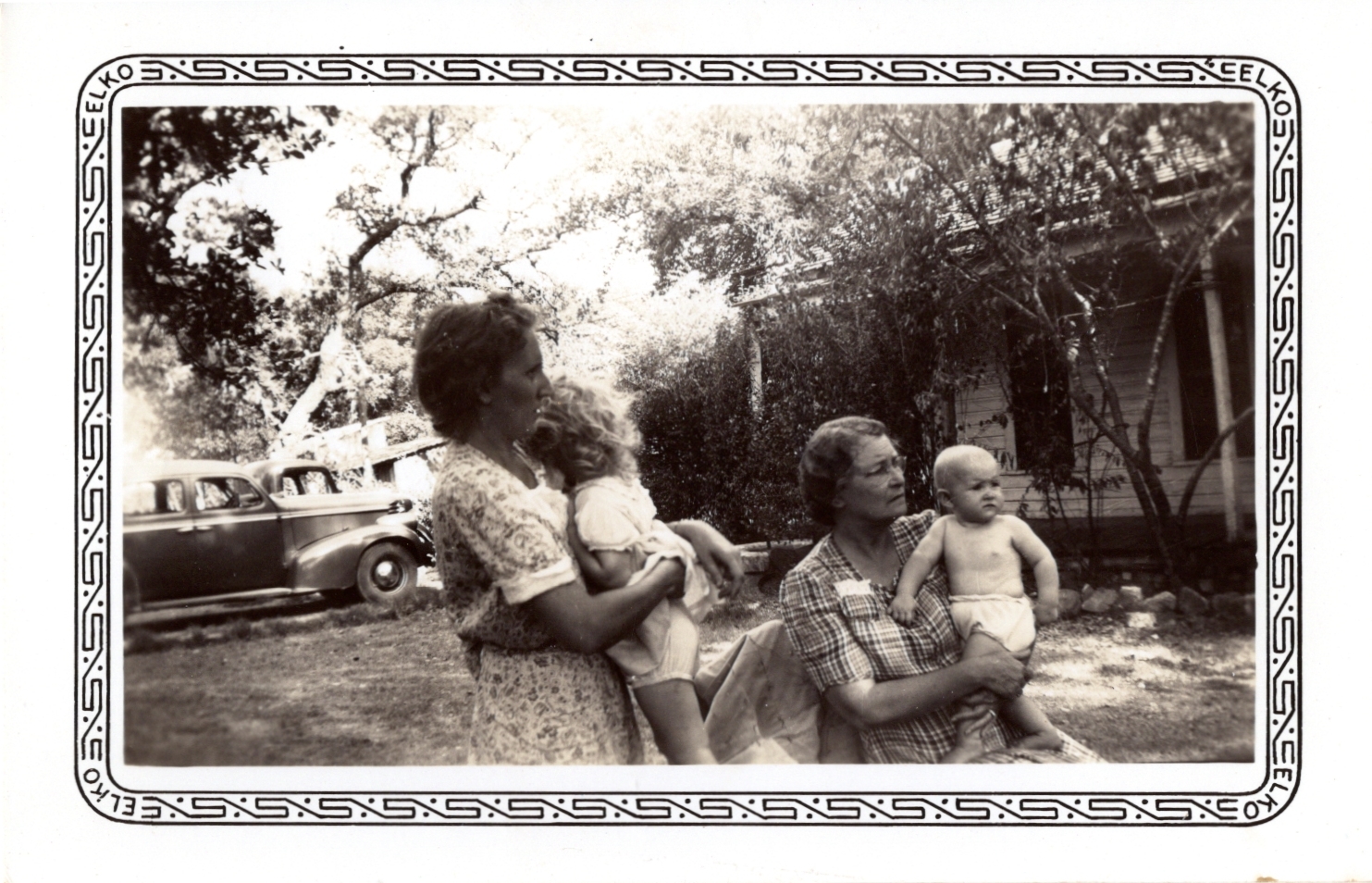
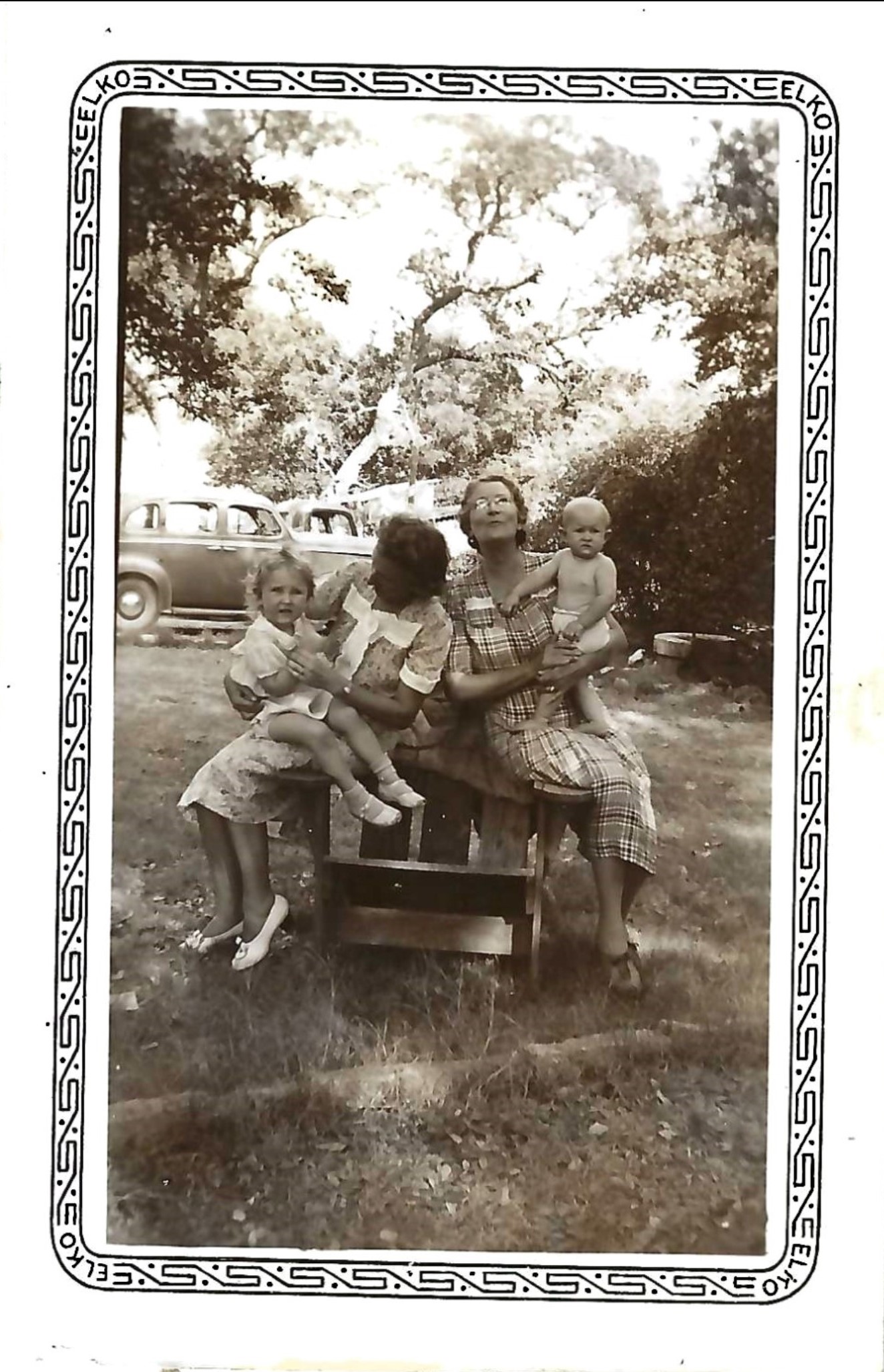
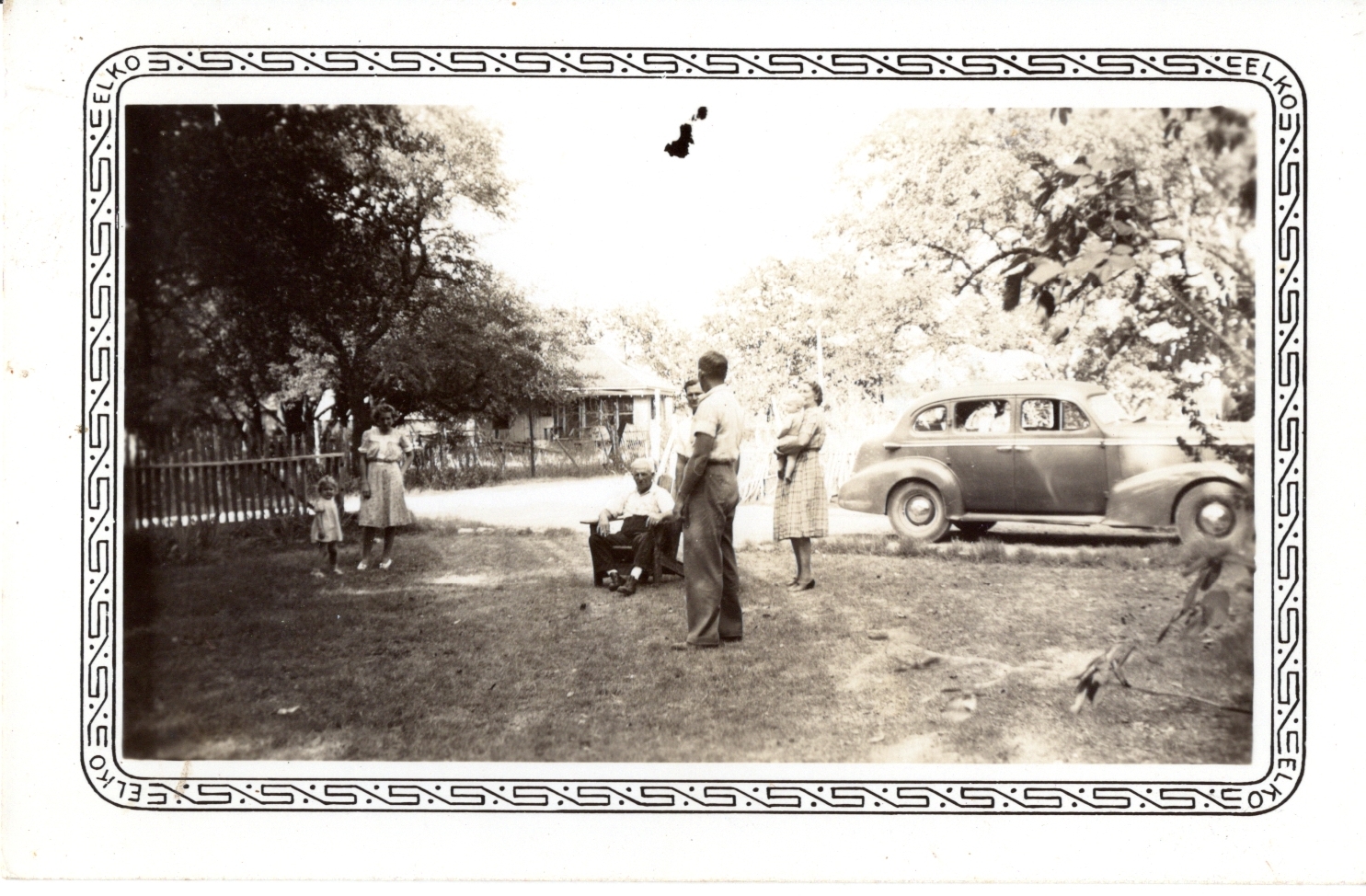
This series of photos is from the Old Home Place, around 1942, judging from how old Aunt Billye is. She’s the tiny one in diapers. And the toddler is my mama, Kay. The older couple are my great grandparents, Jack and Mary (Howard) Adams, The younger couple are Jack Howard and Tut (Edwina Sandberg) Adams, parents of Kay and Billye. The two other men are Jack and Mary’s sons Elzah (in the white shirt) and Earl (in the long sleeve shirt) Adams. I love this series of pics, starting with the random group shot of everyone not yet organized. I can’t imagine trying to wrangle this group. Maybe this was Easter? It was early in the war anyway, before the three boys got sent off in various directions. You can see the curb stones in many of the shots, particularly the ones of Tut and Mary and the little girls, but also lining the driveway behind them and along the flower beds.
So that’s the story of those gray stones around the front flower bed at our house. If anything happens to Sean and I, I hope some Howard descendant will come get them before they have to sell off our house! 

P.S. Also, I got the WORST case of poison ivy from picking up those stones. Didn’t even think about it at the time and I’m sure all the obvious poison ivy had been mowed down by that time, but the roots were still in the ground and when we disturbed them the poison-y stuff got all over the stones and subsequently all over me. Luckily I was wearing gloves, but it still got all over my arms and across my belly because of the way I was carrying them. I think I eventually had to get a cortisone shot. Yikes. Worth it though!

P.P.S. I’m experimenting with slideshows, so don’t miss the series of pictures in the two at the end of the post! You can click the little arrows on either side of the photos to advance.

Immigration, but I digress…

So I thought I wouldn’t have any trouble with this week’s topic. I have a plethora of immigration records for the branches of the family that I can trace. But when I settled on our first Swedish ancestors as my topic it sent me all the way back to the early days of my research and I got caught in a procrastination whirlpool. I was looking at the immigration record for my 3rd great grandparents, Jonas Christersson and Maja Lena Svensdotter and their four children, and in trying to refresh my memory, as well as retrace my steps of probably 15 years ago now, I got stuck on the question of how I knew where to look for them in Sweden.

As I recall, my Aunt Billye was the one who found that ship record (above) showing the family arriving on the Ship Lexington, in Boston, Massachusetts, on September 20, 1853. When I got my Ancestry account in October of 2010, I started compiling all of the information I could about them from what was available, but it was mostly just census records at that point. But sometime that fall Ancestry released the Swedish Church Records. It may have been the reason I started my subscription, but I kinda remember sitting down at my laptop one morning and opening an email annoucement and getting super excited. Prior to that, if you wanted to search those records you had to purchase a DVD set for a princely sum and then you had to know how to find what you were looking for. The records on Ancestry weren’t very user friendly either, and it took me some weeks, with the help of a book that Aunt Billye loaned me, to figure out how to trace our family in those records. But by the next June I had a very detailed story to present at our family reunion. I had found both Maja Lena and Jonas’ families in Sweden, gone back more than a few generations, and traced a few of their siblings, adding some cousins to our family tree who we had always only known as family friends, and realizing that some branches we had thought had only married in were actually fairly close cousins.

But I still can’t remember how I knew where to look! Swedish Church Records are very detailed and if you know the name of the parish a person came from and either the year of their emigration or their birthdate you can find them in the parish Birth Records or what’s called the Moving Out Records and start tracing them through the Household Examination Books. I’ve spent the last week going through all of my primary sources that I would have had available at that time looking for any reference to the fact that Maja Lena was born in Lekeryd, that Jonas and all four of the kids were born in Forserum, or that the family emigrated from Forserum. And I can’t find anything! I also can’t find my research notebooks from those early days. They are somewhere in this house, but — detour! I was sitting here typing and something made me look to my left and there they were! Well, not quite that simple, but I had consolidated some of my genealogy stuff and I didn’t remember where I’d put it till I was sitting at just the right angle to see that shelf. Ah the trials and tribulations of the disorganized. Anyway, it didn’t really help, because even though I found the notebook I’d been wanting, it didn’t shed any light on the question of how I knew where they emigrated from. Sigh.

The good news out of this week of searching is that I’ve been looking through all kinds of boxes and notebooks and files and I happened across some things that I’d always meant to scan. So I’ll share them here instead of hiding them in a to do pile!

Anna Lena Jonassdotter Christerson Carlson &
Hedda Christina Jonassdotter Christerson Mercer Sandberg

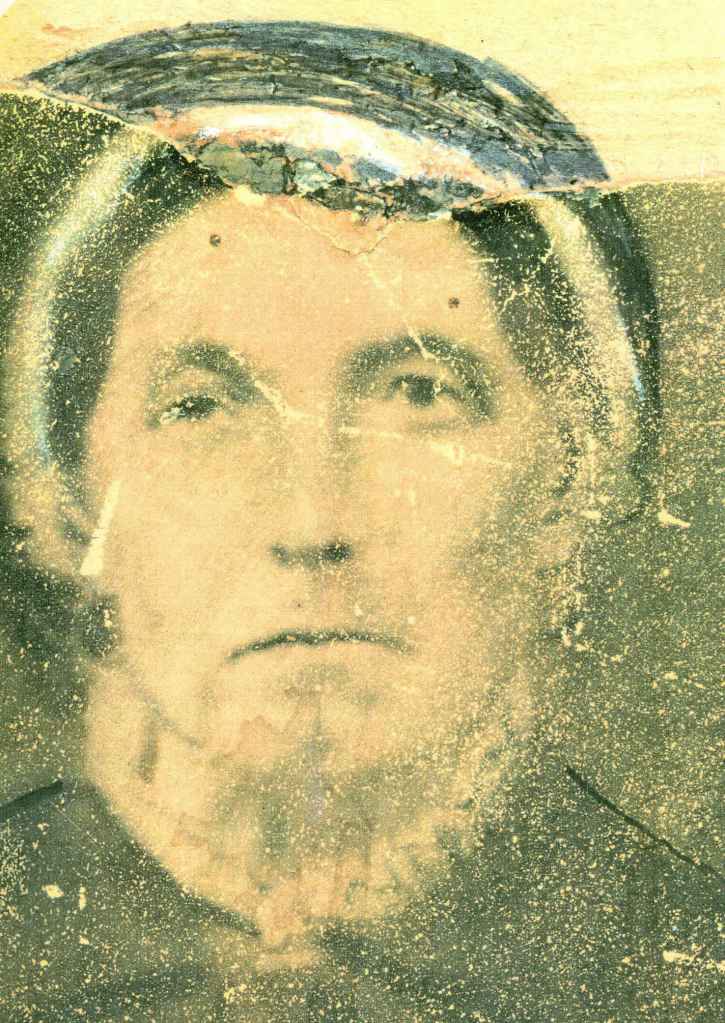
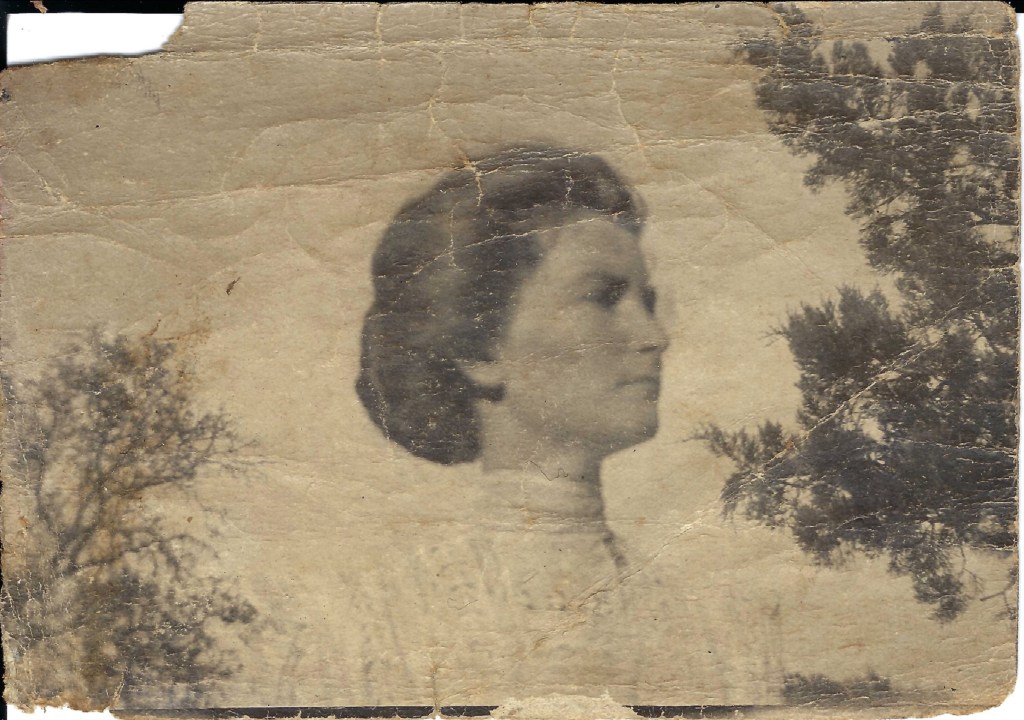
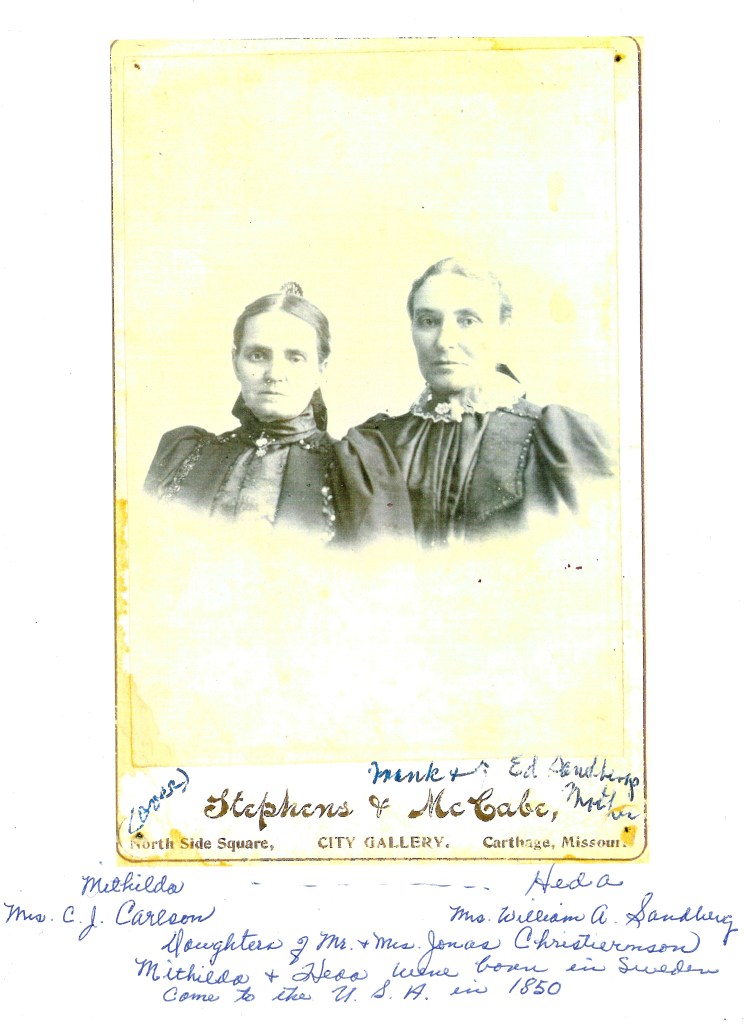
I had completely forgotten about this photo. I’m not entirely sure where it came from and the handwritting is sort of familiar, but I’m not sure whose it is. It is a color copy of a scan of the original and it comes from a collection of old scrapbook pages with lots of other photos that I have seen before and mostly already have in my collection. The note at the bottom says this is a picture of, on the right, our Hedda, my great-great-grandmother. As noted, she was mother to Frank and Ed Sandberg, as well as Hilda and Mart.

The notation for the woman on the left, though, is a little garbled. Hedda had three sisters, Anna Lena, Mathilda, and Adla Suzanna. She also had a brother Sven August. The four older children are listed in the ship record above. Adla Suzanna was born 21 June 1859, after they had been in America for about 5 years. And Maya Lena was 47 when she was born! The notation says that this is Mithilda (spelled wrong all three times) and that she is Mrs C. J. Carlson. I am pretty certain that this is not Mathilda, because she died in 1870 at the age of 18, when Hedda would have been about 25. Neither of these women are that young.

The name Mrs. C. J. Carlson is incorrect, and comes from the description of the family from page 181 of The Swedes in Texas, 1838-1918. Hedda’s oldest sister, Anna Lena, married a guy named John Carlson. I started to tell their story way back in 2018 when I started this blog (link here. I probably ought to get back to that…). So the surname is correct, but the initials are not. But the thing that tells me that this is Anna Lena is the address of the photographer, on the square in Carthage, Missouri. When John left Texas after “the incident” he and the rest of the family ended up in Carthage, Missouri.

Maja Lena Svensdotter Christerson

Also, she absolutely has her mother’s eyes.

I also found this lovely photo of my great grandmother Mary Belle Howard Adams as a young woman, probably around 1900.

Mary Belle Howard Adams

Paula Jacqueline Sanders & Jack Howard Adams

This cutie-patootie picture of my little sister, Paula, with our Popo Jack, circa 1972.

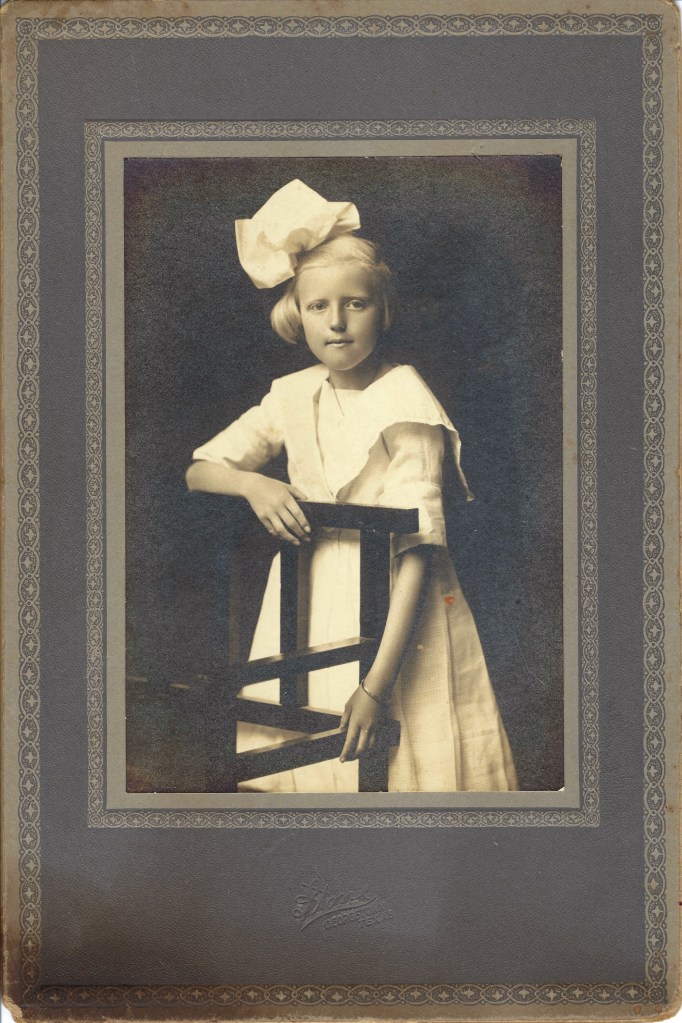
And this wonderful portrait of my great Aunt Flossie. I imagine this must have been right around the time that she and her father and her sister Lillian moved to Texas in 1908.

Florence Anderson

There are lots more where these came from, so I’ll have to plan some scanning time into my weekly schedule and get some more of these shared on here. And hopefully I’ll get myself back on track for next week’s topic, “Heirlooms.” I guess photos count as heirlooms? Don’t they? You might just get more of these!

Origins – Finding John Adams

I have a number of brick walls on my family tree, most of them on my mother’s father’s branch. There’s my great-great-great grandmother, Mary Ann “Polly” Stuart Pickens, born in Kentucky around 1803. or 1813. or 1817. or 1810. or 1804. or 1814. It all depends on which answer she gave the census taker. It’s hard enough finding female ancestors before 1850 without all this disinformation, Polly!

And then there’s Tom Howard, who was supposed to have been born in East St. Louis in 1840. And that’s all I’ve got really. Not much to go on. I’m hoping DNA can provide some clues.

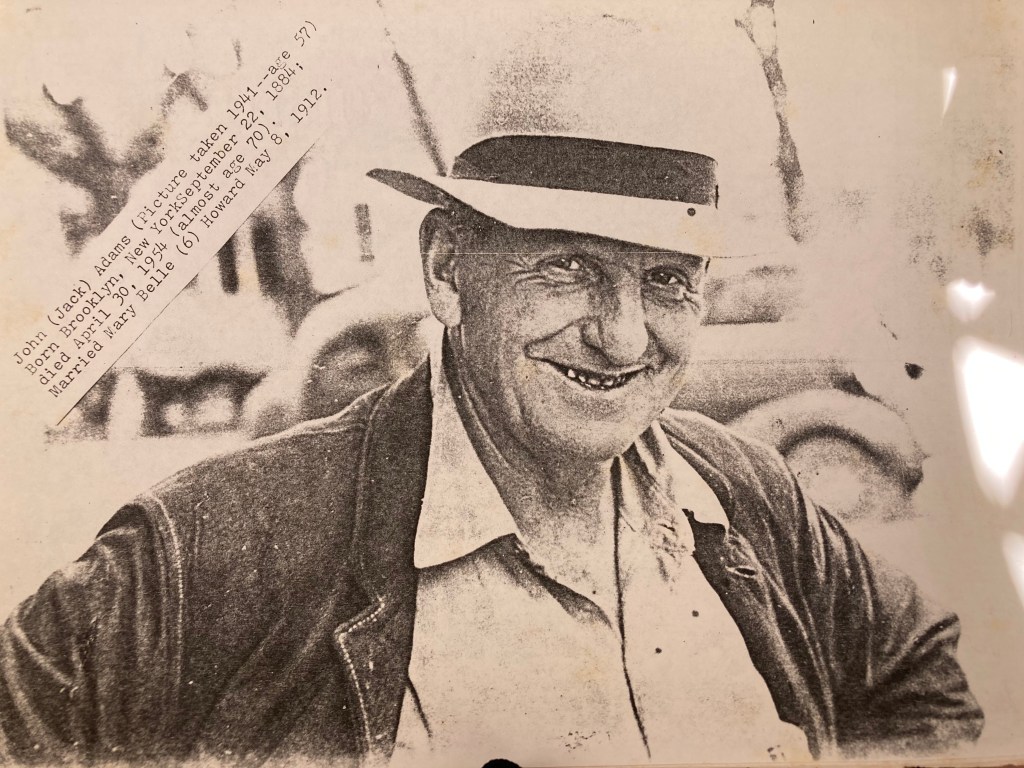
And then there’s this handsome guy. John Adams. Often called Jack. The only facts we really knew about him were there in the typed note attached to his picture. His origins were a mystery.

In another note on the same picture in another of my great Uncle Earl’s (Earl Kenneth Adams 1918-1999) genealogy books that he self published in 1989, it says, “Jack (John) Adams (September 22, 1884–April 28, 1954) Picture taken July 1941. Parents were Frank Adams and Helen (Rogers) Adams. Born Brooklyn. New York. Had a full sister named Mary. His dad married twice. Five or six half-sisters.”

Oh, and also, Adams was not his real name. He had changed it after he ran away from home and he never did tell anyone what his original name was. Well, this one old boy might have known, but he died before my uncle could ever ask him. There was speculation that he might be Jewish (That nose!), and he used to like to debate with the Catholic priest (and there’s also a receipt somewhere of his donations to the Catholic church here in Georgetown). And there was some convoluted story about someone who had known his name but couldn’t remember it, but he thought it was the same name as those folks who used to live in so-and-so’s house and so Uncle Earl actually went to the courthouse and researched the property records and the name might have been Fontaine? So French roots? Who knows.

But still, based on Earl’s note about Brooklyn and his parents Frank and Helen, every once in a while I would do a search and see what I could find. I never really turned up a likely candidate. Since he was born in 1884, and there is no U.S. Census for Brooklyn in 1890, there weren’t many possible records to search. And searches of the 1900 census for New York turned up lots of Adams families all over the state, but none that had a John who was the right age, or if he was, I could trace him forward to a marriage and a family that weren’t mine.

But there was this one kid. In the 1900 census for New York, in the Burrough of Manhattan, an inmate in The New York House of Refuge, Randall’s Island. Well, that had to be investigated.

My trip down the rabbit hole of the social reform movements of the mid to late 19th century, eventually led me to this website: https://newyorkjuvenileasylum.com/.

There are extensive records for the New York House of Refuge, including individual inmate records that detail their time there, and admission and discharge records that might include information about their family. The records have been digitized and are available on microfilm from the New York State Archive, but there are 350 volumes of material, so I decided to wait until I could afford to have Mr. Clark Kidder, at the above website, do the research for me. I had to wait until last fall, when my genealogy budget could accommodate his research fees, but boy, was it worth it!

It turned out there were two boys of approximately the right age named John Adams, but further research showed that they did not match my John Adams. But then Mr. Kidder went the extra mile. I had provided what few details I had, including the fact that Adams might not be his birth name, so he searched on just the birth date. And he found this:

Hi Toya,

In addition to what I sent previously, the closest I can find is the following boy that had the same date and year of birth, was born in Brooklyn, and had a father named Frank:

John Aubrey
Born: 22 Sept. 1884 in NYC
Resided: 13 Center St., Brooklyn, NY
Father: Frank
Father’s occupation: Watchman
Father’s Nationality: French
Mother’s Nationality: Irish

Mother: Dead
Stepmother: Ellen
3 boys and 1 girl in the family

This looked promising!

I searched for the family in Brooklyn in the 1900 census and found them in Red Hook with 7 kids. I also found all kinds of records for them, including a death record for his dad, Frank, in 1902, just a little over a year after John is discharged from the House of Refuge.

But I still wasn’t sure if I could connect this kid to my Jack Adams. I had started building out their family tree when it occurred to me that I ought to check my DNA results to see if we actually had any French ancestry on my mom’s side of the family. I knew there was a little bit, but I thought it was on my dad’s side. But lo and behold, all the French ancestry was on Mom’s side! And then, I think my heart actually stopped. One of the DNA cousin matches who is related to me and my aunt and my Adams cousins had a very limited family tree attached to her account, which included as her grandfather one of those 7 kids from the 1900 census record! I was gobsmacked. After all this time, there he was. With his real name. And his birth family. It felt like I was on an episode of Finding Your Roots.

Of course, now that I have this answer, I have a bazillion more questions. I still don’t know his birth mother’s name or when she died or where in Ireland she came from. I can’t find any other records about his father before 1900, other than a naturalization petition index record from 1895 that shows he arrived from France on 15 May 1875. But which part of France. And at almost 30 years old, was he single when he came? or is there another family that came before Jack and his mother. And what about the sisters? Lots to do!

Join us next time for another episode of Chasing Swedes (and other ancestors of varying ethnicities).