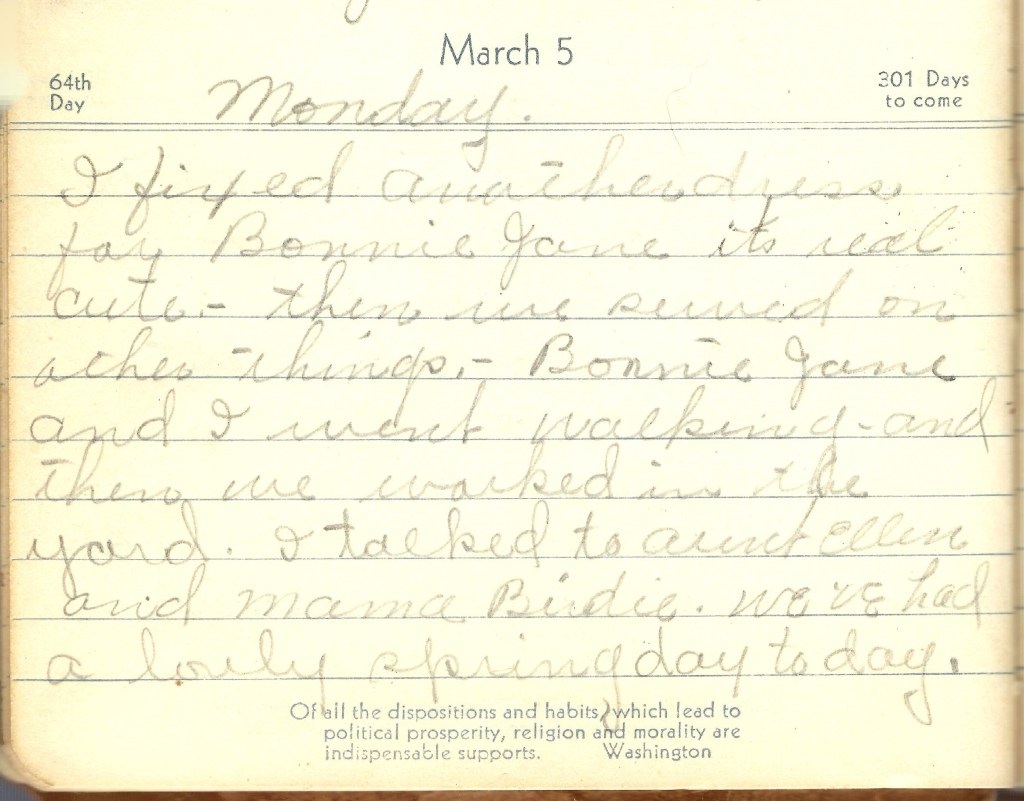
I fixed another dress for Bonnie Jane its real cute.- then we sewed on other things.- Bonnie Jane and I went walking – and then we worked in the yard. I talked to Aunt Ellen and Mama Birdie. We’ve had a lovely spring day to day.
March 6
Tuesday.
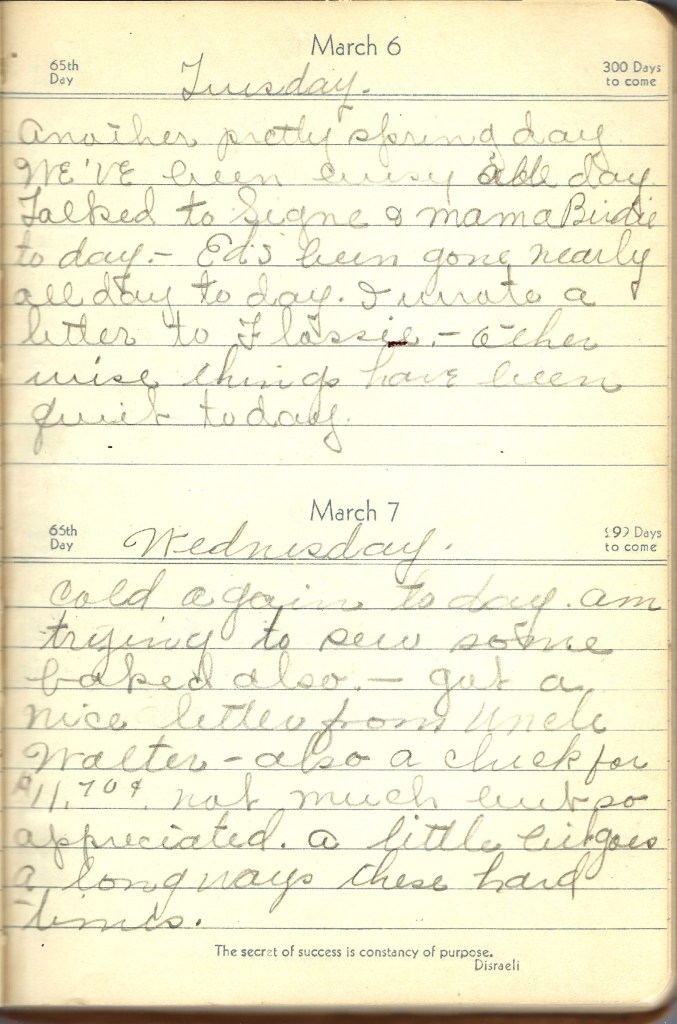
Another Pretty spring day we’ve been busy all day Talked to Signe and Mama Birdie to day.- Eds been gone nearly all day to day. I wrote a letter to Flossie.- other wise things have been quiet today.
March 7
Wednesday.
Cold again to day. am trying to sew some baked also.- got a nice letter from Uncle Walter – also a check for $11.70. not much but so appreciated. a little bit goes a long way these hard times.
March 8
Thursday.
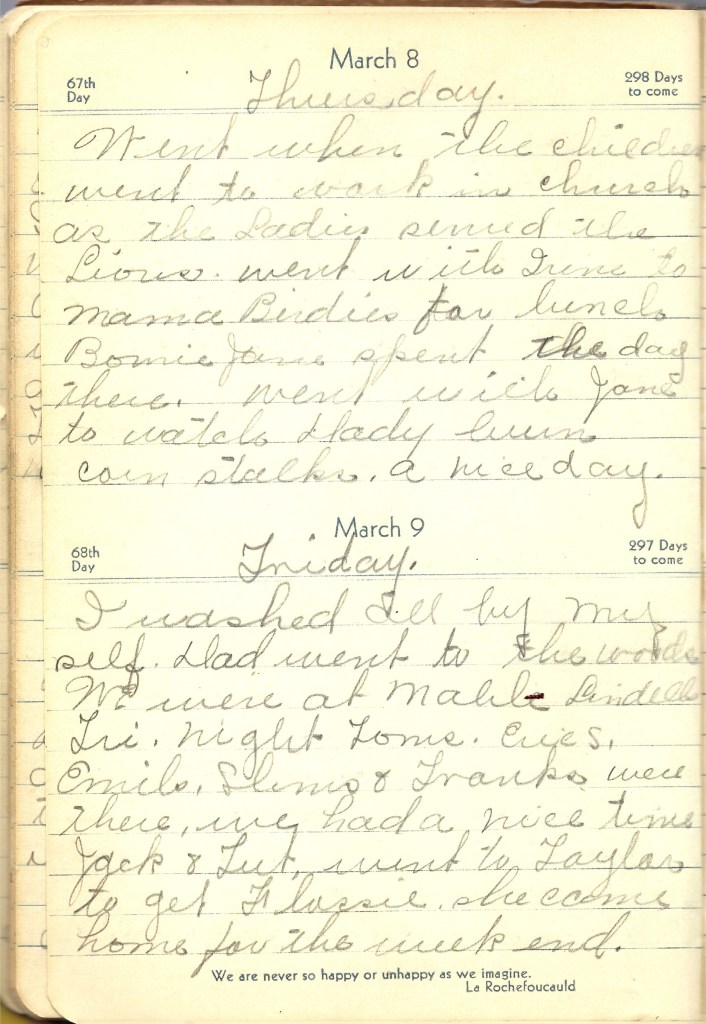
Went when the children went to work in church as the Ladies served the Lions. went with Irene to Mama Birdies for lunch Bonnie Jane spent the day there. went with Jane to watch Dady burn corn stalks. a nice day.
March 9
Friday.
I washed all by myself. Dad went to the woods We were at Mable Lindells Fri. night Toms, Erics, Emils, Slims, and Franks were there. we had a nice time Jack & Tut went to Taylor to get Flossie. she comes home for the week end.
March 10
Saturday.
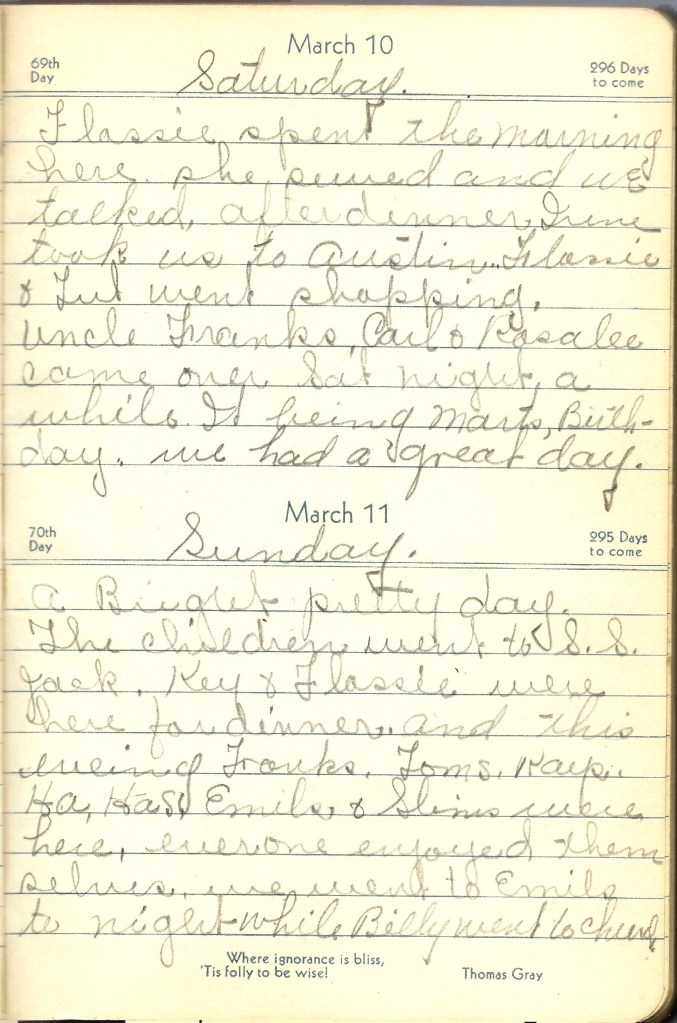
Flossie spent the morning here she sewed and we talked. after dinner Irene took us to Austin. Flossie & Tut went shopping. Uncle Franks, Carl & Rosalee came over Sat night a while It being Marts birthday. we had a great day.
March 28
Sunday.
A Bright pretty day. The children went to S.S. Jack, Key & Flossie were here for dinner. and this evening Franks, Toms, Rays, HaHas, Emils, & Slims were here. everyone enjoyed them selves. we went to Emils to night while Billy went to church.
Lots of visiting and fun this week.
Not sure who Signe is.
Uncle Walter is probably John Walter Long, Lill’s mother Amanda’s brother. Wonder what the $11.70 was for?
Happy Birthday, Uncle Mart!
Someone please remind me who Mr HaHa is! I remember Mama Tut talking about him, but I can’t remember who he is exactly.
I’ve often wondered where my curiosity about languages came from. I took took two years of French and then a year of Spanish in high school. And then, when they wanted to start me in a sophomore level French class in college, I decided I’d rather start over again with something else, so I said, I’ll try Russian instead! So I took two years and then decided that I’d rather do art than languages and went off on that tangent for my eventual degree.
My dad is a native Spanish speaker, but will admit that he only had about a 6th grade education in Spanish, because after that they came to the States for school and only spent holidays in Guatemala. I remember him speaking Spanish with his mother almost exclusively, and we would all laugh when they would talk about maybe what we were going to do that day and then ask me if that sounded okay and I would reply in English, having fully understood the conversation up to that point. It was like this beautiful background music to my childhood and when I had to study it in a classroom it wasn’t nearly as much fun as Russian, but I still think if I were to do one of those immersion programs, even at this point in my life, I would probably get pretty fluent pretty quickly, at least conversationally.
My dad and his parents, all Spanish speakers.
In contrast, my mom’s mom’s family, all descended from native speaking Swedes, never really spoke Swedish themselves. Many of the cousins in my grandmother’s generation still used some Swedish words and phrases (and even a Swedish blessing over the meal at gatherings) and they remembered their older relatives speaking Swedish in the home and at church, but in their generation – one or two removed from the old country – it had mostly been lost.
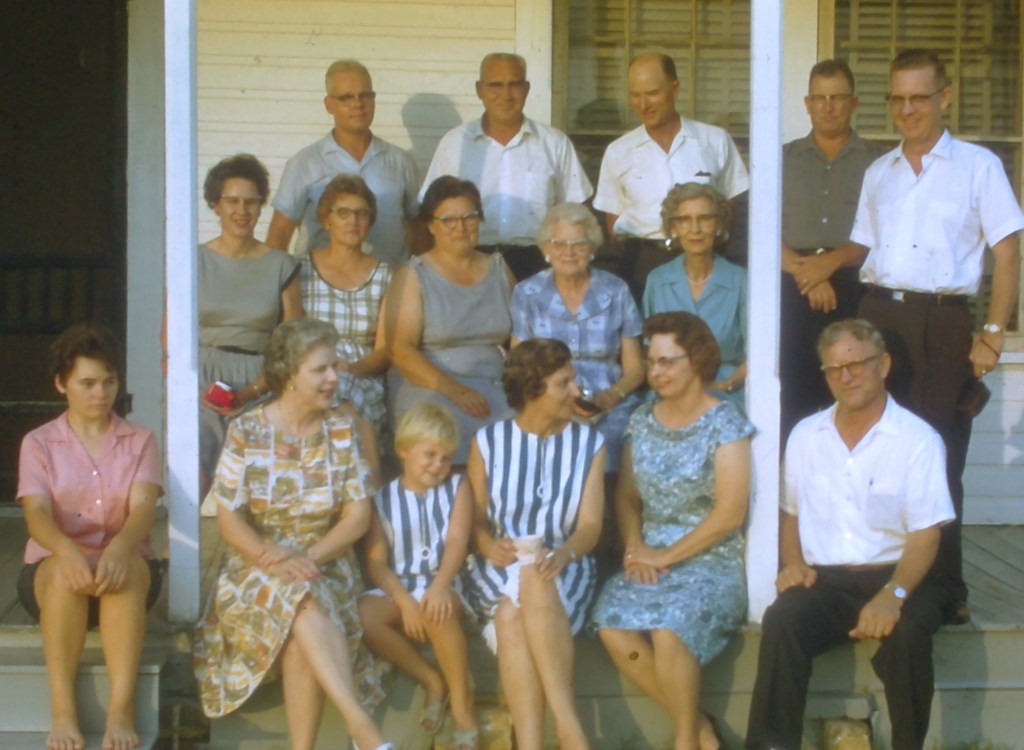
Swedes on the porch at Happy Hollow, Georgetown, 1964. Ruth and Irene, seated in the center, both in blue with gray hair, would have probably spoken Swedish with their elders.
Who knows what might have happened to the language processing centers of my little brain if I had heard English, Spanish, and Swedish spoken regularly during my childhood. The science of brain development says the language acquisition centers are wide open from birth to about 5 years. I might be a multilingual translator at the UN at this point! Anyway, that curiosity about languages has made it easier to figure out how to translate and interpret the Swedish Church Records. Also on the list for future research efforts is to see if I can help my dad with some of the Guatemala research, although those records are about as few and far between as Irish records, so that’ll be a big challenge!
My its been cold today. The children dident go to school. Bonnie got her gift from Aunt Ruth to day. a doll quilt & lunch cloth.- was she glad – I wrote Ruth to night.- have done nothing unusual to day. – We are all well.
February 27
Tuesday.
Nothing unusual. Daddy Ed went to the woods. I talked to Mama Birdie they were all well – washed some – and fixed extra for lunch. It is rather cold and looks like more rain.
February 28
Wednesday.
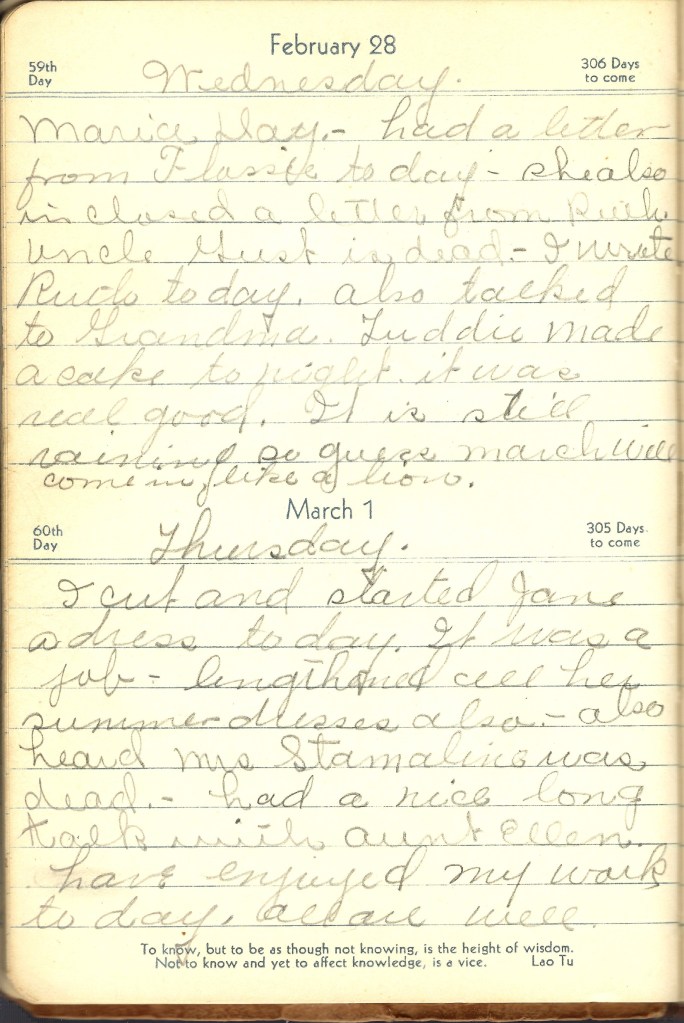
Maria Day.- had a letter from Flossie to day – she also inclosed a letter from Ruth Uncle Gust is dead.- I wrote to Ruth to day. Also talked to Grandma. Tuddie made a cake to night. it was real good. It is still raining so guess March will come in like a lion.
March 1
Thursday.
I cut and started Jane a dress to day. It was a job – lengthened all her summer dresses also.- also heard Mrs. Stamline was dead.- had a nice long talk with Aunt Ellen. have enjoyed my work to day. all are well.
March 2
Friday.
The same old work washed this evening also washed my head. talked to Tuddie she is still at Tom’s. havent been any where this week as it rained and rained some more.
March 3
Saturday.
We went to town after dinner – went to Grandma’s for coffee. Mama Birdie was there also. went over to Irene’s also – Mug & her family are up from Taylor. Bonnie staid at Irenes all afternoon.- I enjoyed the afternoon so much.
March 4
Sunday.
The children went to S.S. and Ed went to church. Tom & Irene were here for dinner We were all at Emils for coffee.- quiet a nice crowd were there. we stayed on and the boys went to church Tut spent the day at Pollys. Burton & John L. call a few minutes
Well, I didn’t think until this week, that the days and dates in 1934 won’t match up to 2024 after this week because 2024 is a Leap Year. Might get a little confusing, for the transcriber at least, so bear with me if I make any mistakes. I know from scanning future pages that Lill herself gets her days and dates mixed up later in the spring, so we’ll all just be confused together.
From, Wednesday, Uncle Gust is Lill’s father Aaron Anderson’s older brother Johan Gustaf, who lived in Iowa.
Mrs. Stamline had me stumped for a minute. Dr. Rev. J. A. Stamline was another older brother of Aaron Anderson. He was a Lutheran minister and served in churches throughout Central Texas. I knew he had married twice, and there were a couple of kids, but I don’t really feel like I’ve ever gotten all the names sorted properly. I did find, though, that he had in fact married a 3rd time, in December 1927, about 6 months before his death in July 1928, to Mrs. Hulda Schliker. She and her first husband were both bakers and owned their own bakery. He died in 1922, the same year as Uncle Stamline’s 2nd wife. Maybe Lill refers to her as Mrs. Stamline rather than Aunt Hulda because she never got to know her very well?
Also, I checked the census for 1930 and “Grandma” Annie Swenson Anderson is living in Georgetown with siblings Emily, Edwin and Lillie. I think it says their house is on Main Street, but can someone confirm where the house is/was?
In Sunday’s entry, is “Polly” Pauline Berkman maybe? Leroy’s sister? I know she and Mama Tut were friends. Burton and John L. are nephews, sons of Ed’s brother Frank. I really need to get that Cast of Characters page finished…
Also, stay tuned for a separate post about “The Bedias Expedition.” April is just around the corner and if anybody wants to celebrate the 90th anniversary of this auspicious occasion with another trip to Bedias (although not starting nearly as early in the morning) we need to start planning now! Let me know in the comments if you’d like to come along to “Go Places and See Things.”
I wrote about my great-grandfather Jack (Aubrey) Adams and his name change back in Week 2 , but I have plenty of other candidates for this week’s topic.
Swedish patronymics in general are a topic unto themselves and can cause a whole host of problems when trying to trace family lines. I have seen so many unintended mistakes in other trees caused by an Ancestry hint from the Swedish Church Records collection about someone with the right name and even the right birthdate, but in the wrong parish and with the wrong family members. It’s so easy to get turned around in all the unfamiliar language and indecipherable handwriting and decide that something looks right enough without thoroughly checking the details.
There were also Swedish nature names that folks would adopt as their surname, which were sometimes tied to a location or an occupation, but sometimes not, and sometimes passed down and sometimes not. And sometimes folks would decide to use a different surname altogether, sometimes before they emigrated, but sometimes not until after they got to the U.S., which can make tracing them back to their village in Sweden very challenging. It also means that there’s no guarantee that folks with that surname are in any way related to you!
My great-great-grandfather A. W. Sandberg, as he was known in this country, was one such challenge. He was a bit of a mystery just because of his age and the time period in which he came to the states. He was born in 1849, came to Texas in 1871, and died in 1894, which means he only appears in the 1880 census. His naturalization application offered no clues, and by the time The Blue Book was published in 1918, he had been gone more than two decades, so some of the details about his origins had been lost and the biographies of his children did not offer any clues.
Aside: While his naturalization petition did not contain much detail (“Sweden” is not enough information, Ay Dubya!), it did contain this wonderful tidbit – his signature. I always love it when I find an actual signature rather than a “his X mark.” It feels a little more real.
My Aunt Diddie knew that there were other Sandbergs in Central Texas, but always said that they weren’t related to us, but I was always curious. She did say that A.W. had a sister in Austin named Hilda, who married a guy named Gustaf Peterson and I was able to locate her in The Blue Book. Happily her biography had many helpful details. It says, in part:
“The widow, Hulda Christina Peterson, Austin, grew up in Lekeryd, Smaland, where she was born in 1861. She went to America in 1883 to her brother, William Sandberg, living in the Brushy area.”
The Swedes in Texas, 1838-1918, p. 258
In Swedish-American genealogy, that right there? Is the motherload. Birth year, parish name, and emigration year! I found her birth record (confirming her name as Hilda), her family in the Husförhör (Household Examination records), her moving out record and emigration records, and, more importantly, was able to confirm the sibling relationship to not only A.W. (Anders Wilhelm), but also to another brother, J.A. (Johan August), and to confirm that their patronymic was Magnusson/Magnusdotter. The three of them emigrated till Amerika, A.W. in 1871, J.A. in 1881, and Hilda in 1883. Out of seven total, these three were the only children of Magnus Svensson and Christina Bengtsdotter to survive to adulthood and I can’t imagine what it was like for their parents to send the three of them off to America. Talk about your empty nest syndrome! Magnus and Christina lived until 1906 and 1901 respectively, so they presumably would have known that only one of their children, Hilda, survived them.
All three seem to have adopted the name Sandberg after coming to Texas. A.W. Sandberg appears in the founding documents in the church records of the Palm Valley Lutheran Church, shortly after he arrived in Texas and later, after his marriage to Hedda, with their family. Hilda uses Sandberg as her surname on her marriage certificate to G.E. Peterson. And after his emigration record from Sweden, I have only ever found Johan August referred to as J.A. Sandberg.
Other than the three sons of A.W. Sandberg, this line of Sandbergs only produced one other male to continue the surname. His brother J.A. Sandberg had one son, Ruben Sandberg, but as far as I know, he only had one daughter, so the assertion that there weren’t any other Sandbergs around that were related to us holds up!
I have so many stories about these random Swedish surname connections that I may have to make a whole category and schedule for posting them, just so I can get them recorded somewhere outside of my head. So many stories, so little time!
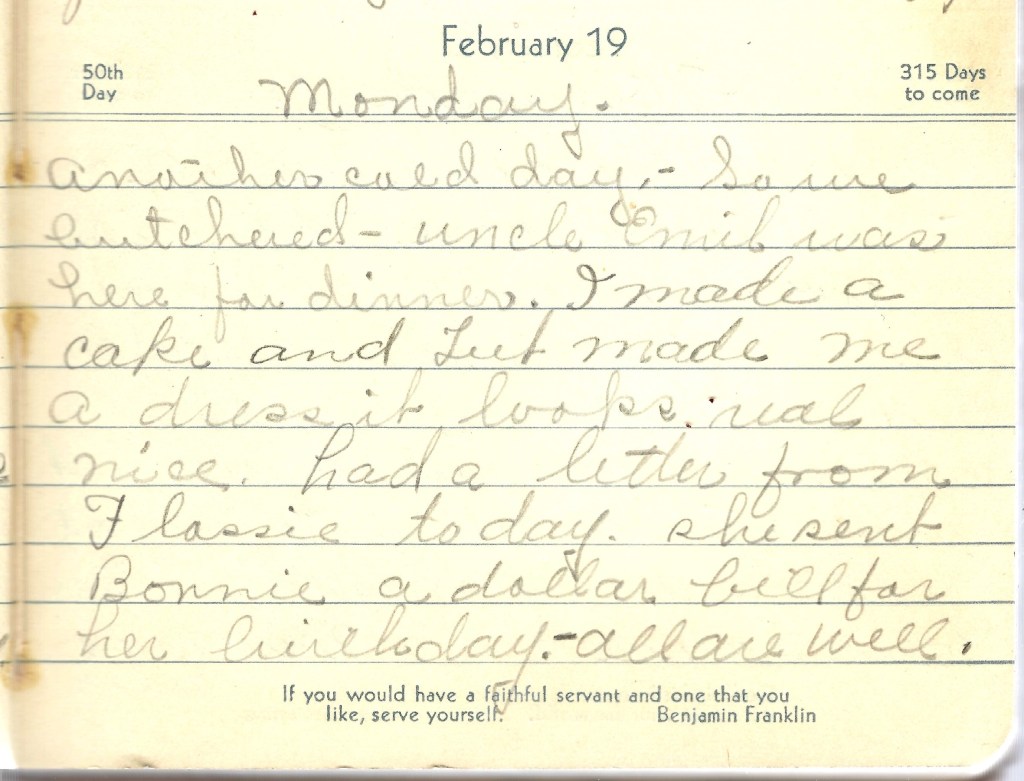
Another cold day.- So we butchered – Uncle Emil was here for dinner. I made a cake and Tut made me a dress it looks real nice. had a letter from Flossie today. she sent Bonnie a dollar bill for her birthday. – all are well.
February 20
Tuesday.
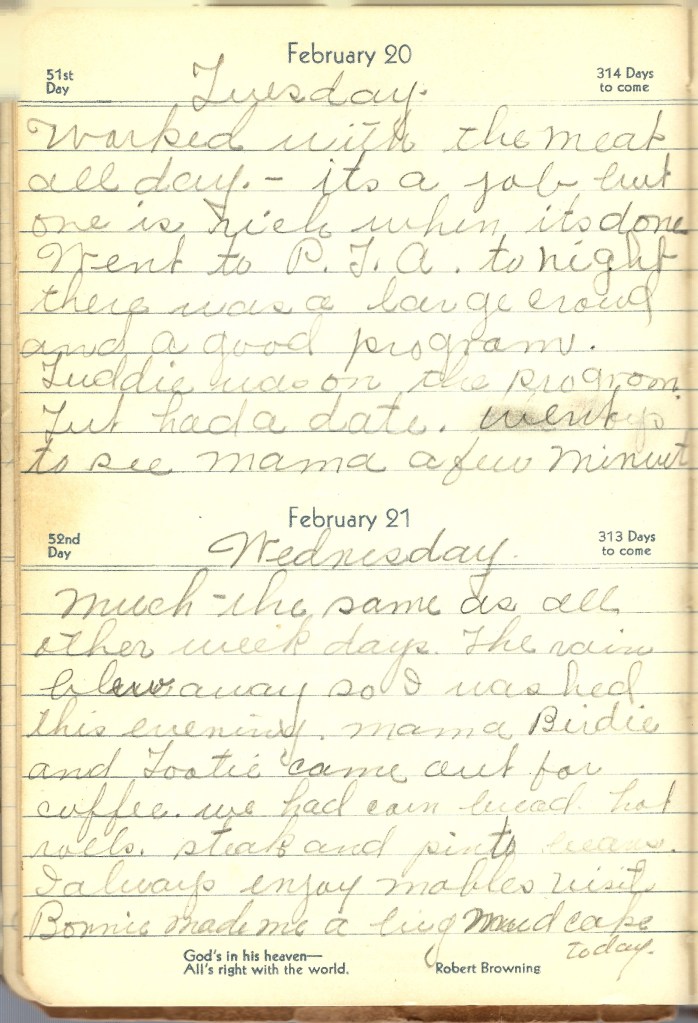
Worked with the meat all day. – its a job but one is rich when its done Went to P.T.A. tonight there was a large crowd and a good program. Tuddie was on the program. Tut had a date. went to see Mama a few minute
February 21
Wednesday.
Much the same as all other week days. The rain blew away so I washed this evening. Mama Birdie and Tootie came out for coffee. we had corn bread hot rolls steak and pinto beans. I always enjoy Mabels visits. Bonnie made me a big mud cake today.
February 22
Thursday.
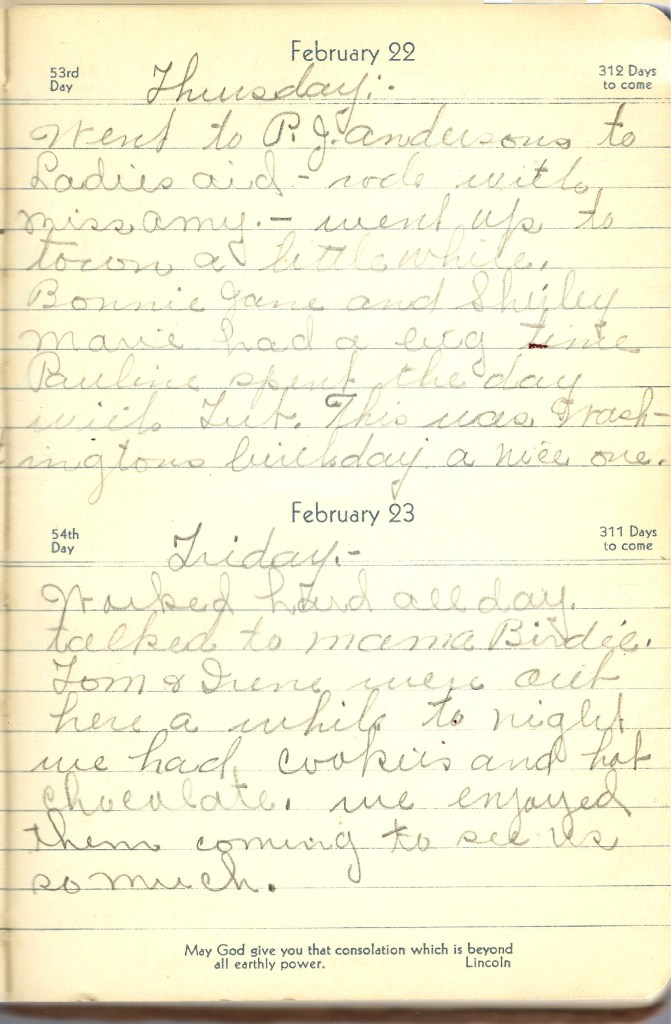
Went to P.J. Andersons to Ladies Aid. – rode with Miss Amy. – went up to town a little while. Bonnie Jane and Shirley Marie had a big time Pauline spent the day with Tut. This was Washingtons birthday. a nice one.
February 23
Friday.
Worked hard all day. talked to Mama Birdie. Tom and Irene were out here a while tonight we had cookies and hot chocolate. we enjoyed them coming to see us so much.
February 24
Saturday.
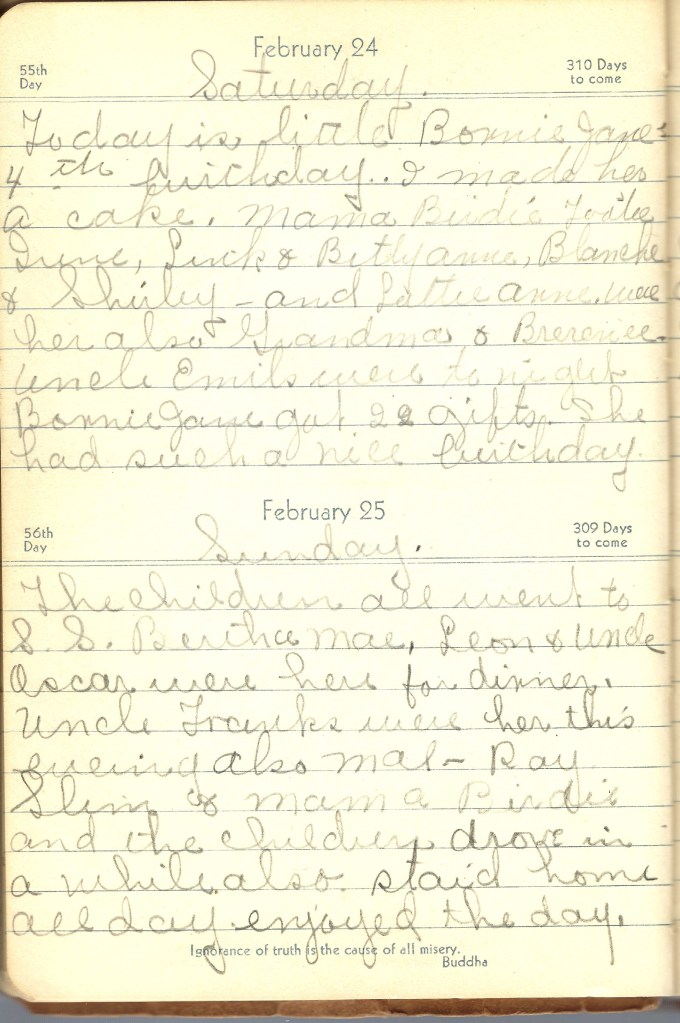
Today is little Bonnie Janes 4th birthday. I made her a cake. Mama Birdie Tootie Irene, Luck (?) & Betty Anne, Blanche and Shirley – and Lottie Anne. were here also Grandma & Berenice. Uncle Emils were tonight Bonnie Jane got 22 gifts. She had such a nice birthday.
February 25
Sunday.
The children all went to S.S. Bertha Mae, Leon & Uncle Oscar were here for dinner. Uncle Franks were her this evening also Mab-Ray Slim & Mama Birdie and the children drove in a while alse staid home all day enjoyed the day.
Lots of hard work all week, but then Bonnie’s birthday on Saturday. I need to look up who Shirley Marie is!
Years ago, when we first moved to Georgetown, my Aunt Sha would comment that now that we had a house we should go get the curb stones from the old Howard place. I sort of knew what she was talking about. Thomas and Helen Melvina (Pickens) Howard came to Texas in the early 1870s and they bought what has come to be known as The Old Home Place. I still have lots of work to do on the origins of the family, as they have been elusive to this point, but once they reached this spot, they settled down and stayed for three generations and, as I recall, the 4th generation still owned it. The curbstones had lined the walkway and flower beds around the house. They had been carved by my great-great-grandfather Thomas Howard, who was a stonemason and is said to have worked on the foundations of the Texas State Capitol building. I wonder if there are any records of that anywhere?
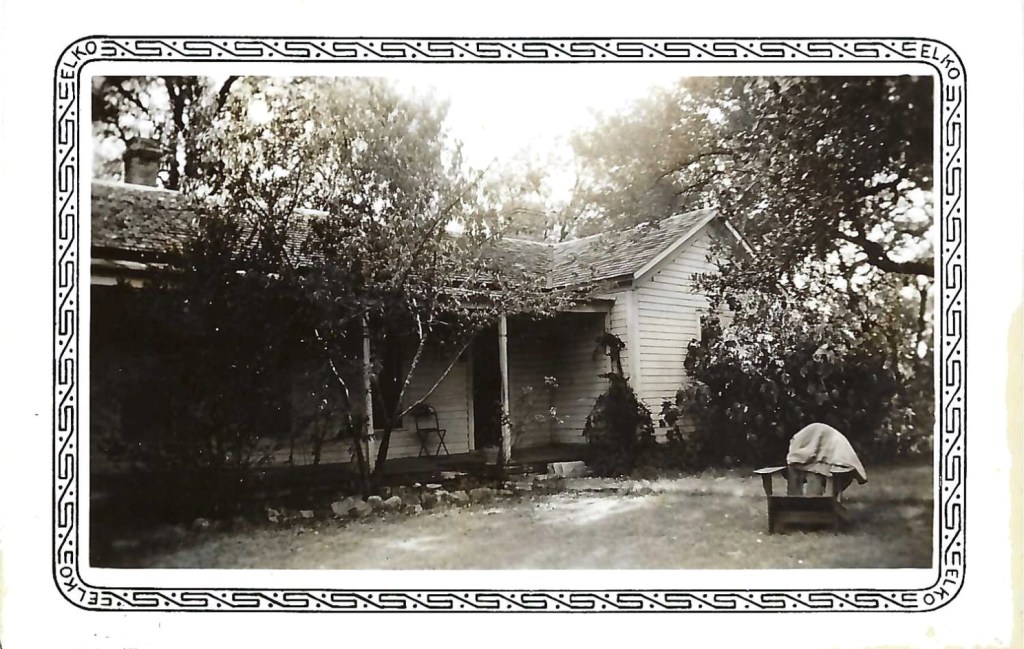
The Howard Adams Place, circa 1942.
Their original homestead was on the current Railroad Street here in Georgetown, across from The Caring Place, on the grounds of an apartment complex. The site of the original house and outbuildings has been left as green space on the corner of Railroad and 19th.
Site of the Old Howard Adams Place, taken from 19th street looking south. I think that’s the old cistern there in the foreground.
I think my aunt had finally sold the property in the early 2000s and we had kind of forgotten about the curb stones. But then one day my oft-mentioned Aunt Billye called and said she had stopped at the construction site of those apartments and had explained who she was and asked if it would be alright if we came and got some of the stones. We weren’t sure how we’d manage it, just her and Sean and I, but we rented a flatbed truck from Home Depot and drove over there. We were walking around that corner where the old house had been and Billye was pointing out the locations of things as she remembered them and we were trying to find the stones and figure out how to extract them, when a guy who had been working on another area of the property came rumbling over in a Bobcat. We explained who we were and what we were trying to do and he was really interested to find out more about the old homestead. Apparently, as they had been cleaning stuff up in that area, they had found all these intriguing things, like the old well or cistern, old chicken wire and barbed wire fencing, and the old curb stones. So we had a nice visit with him reminiscing about the old homestead and then he got in his Bobcat and started lifting up stones for us! He was one of those guys that can use a Bobcat like a precision instrument and he carefully scraped dirt off of some of them and dug under others and lifted them out of the ground so we could pick them up and get them to the truck.
They are not small things. The smallest curb stones are about 12 x 6 x 6 inches and the largest complete stone we were able to find is about 36 x 6 x 12 inches . We also found partial stones that are in between those sizes. And they are HEAVY. They must be limestone and I assume they must have come from one of the local quarries, but they are dense. I’ve hauled around limestone rocks before for gardening projects and they weren’t anything like these. Our helpful friend carried the big one over to our truck on the Bobcat because none of us could carry it that far.
And the really cool thing is you can still see the tool marks. These aren’t fancy dressed stones. They are almost utilitarian. I don’t know if Thomas worked professionally as a stonemason, other than the time he is said to have worked on the capitol. All other sources have him as a farmer. I guess I’ll have to do some more digging into his professional life, huh?
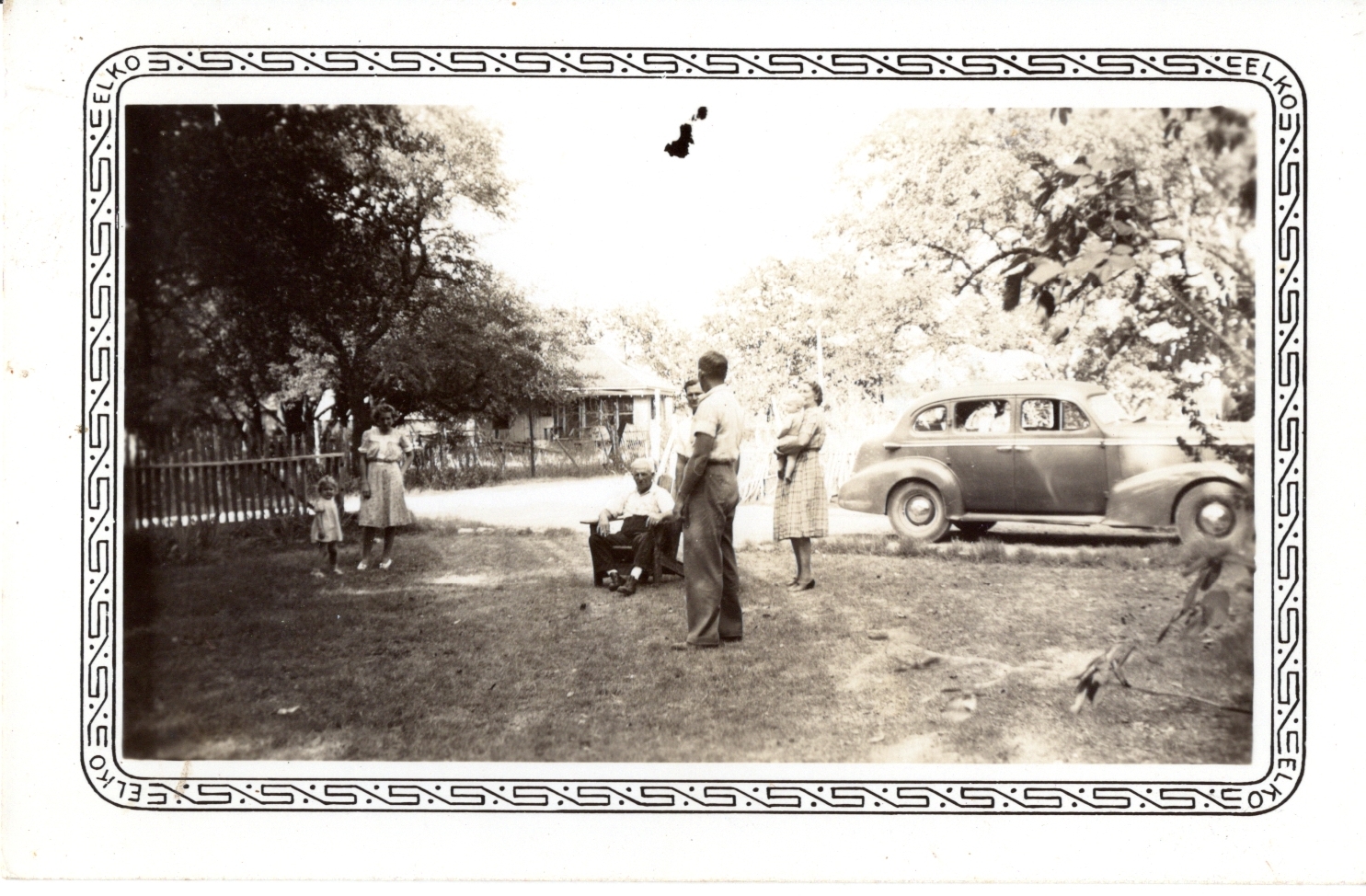
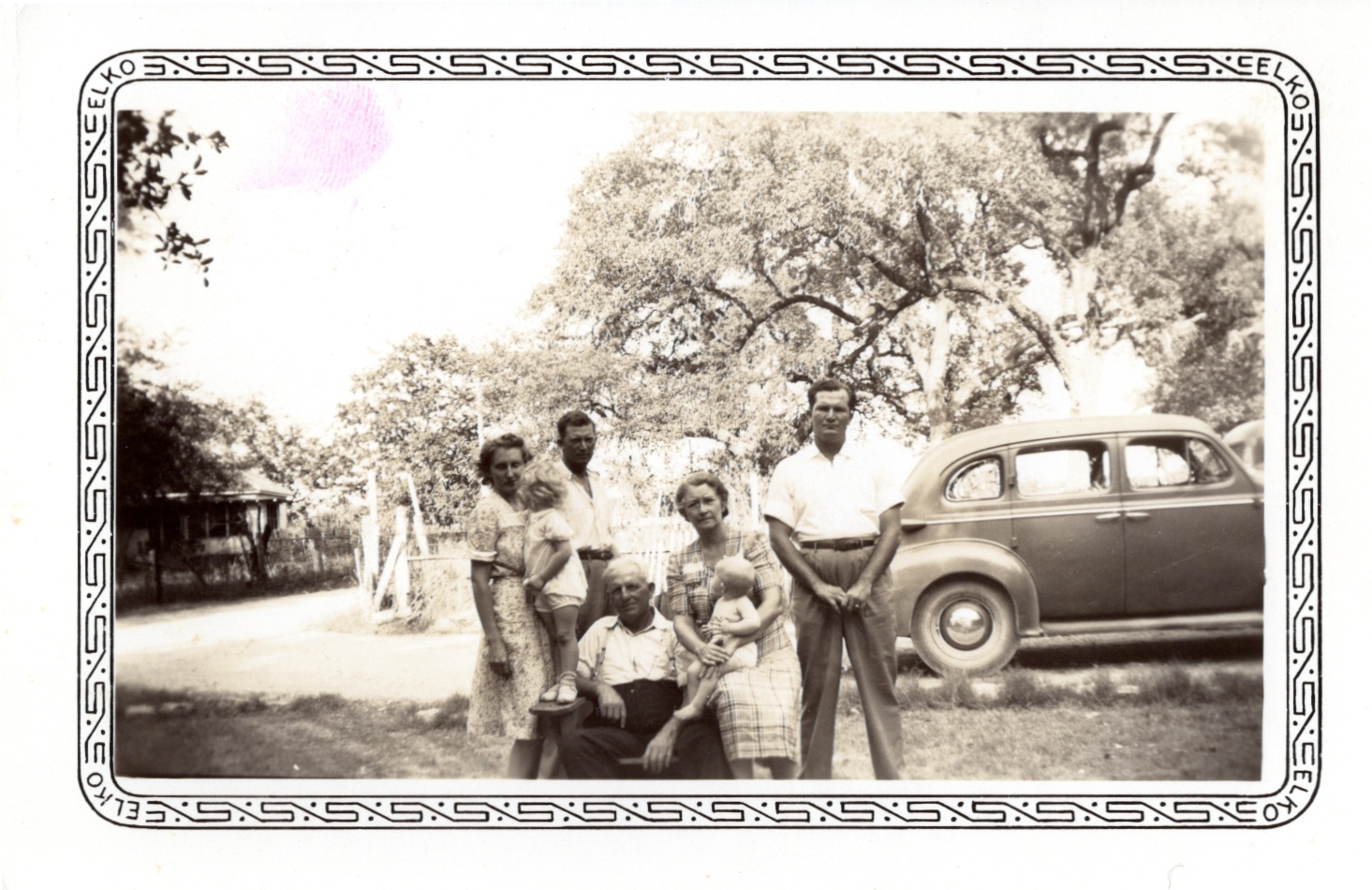
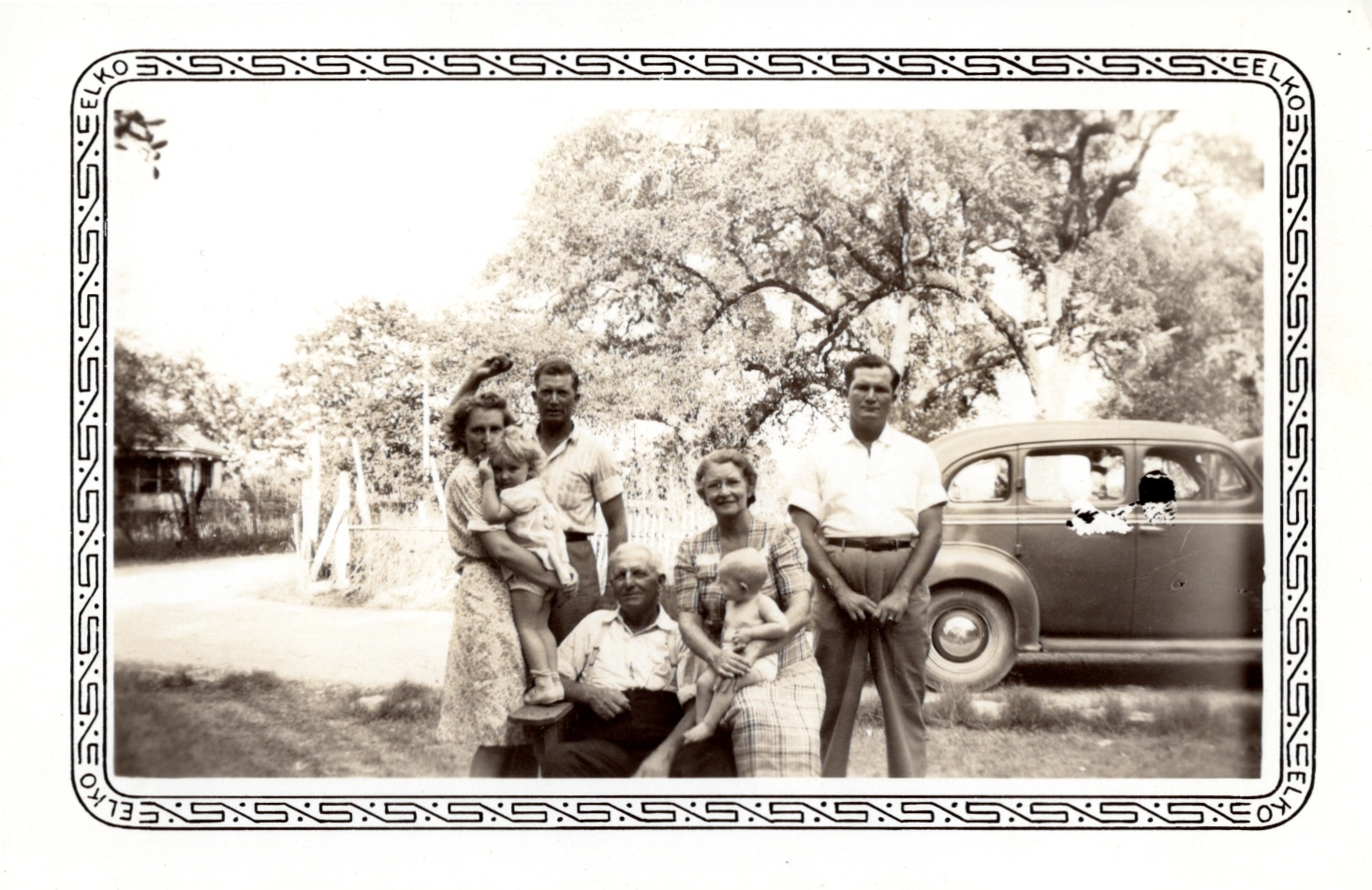
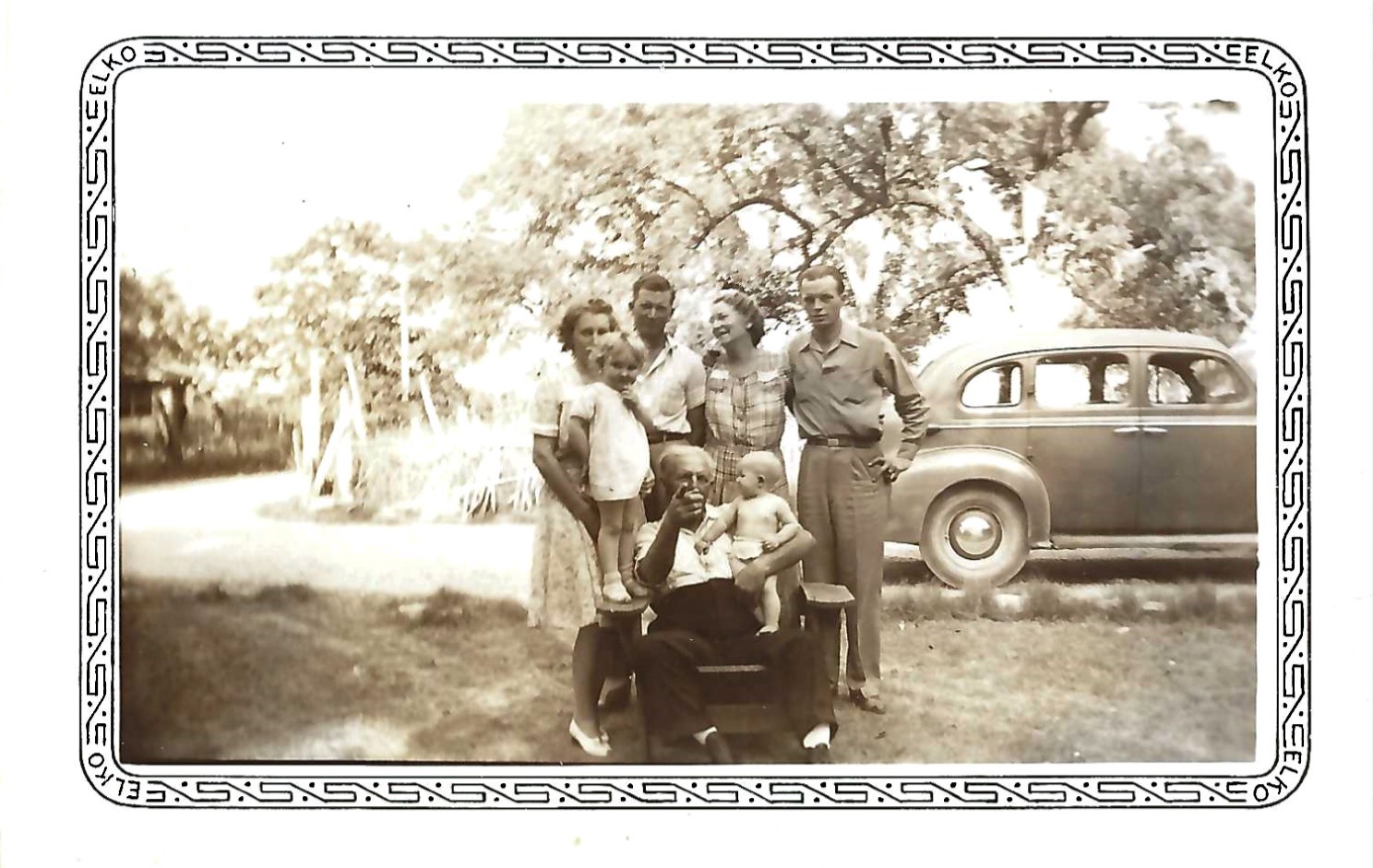
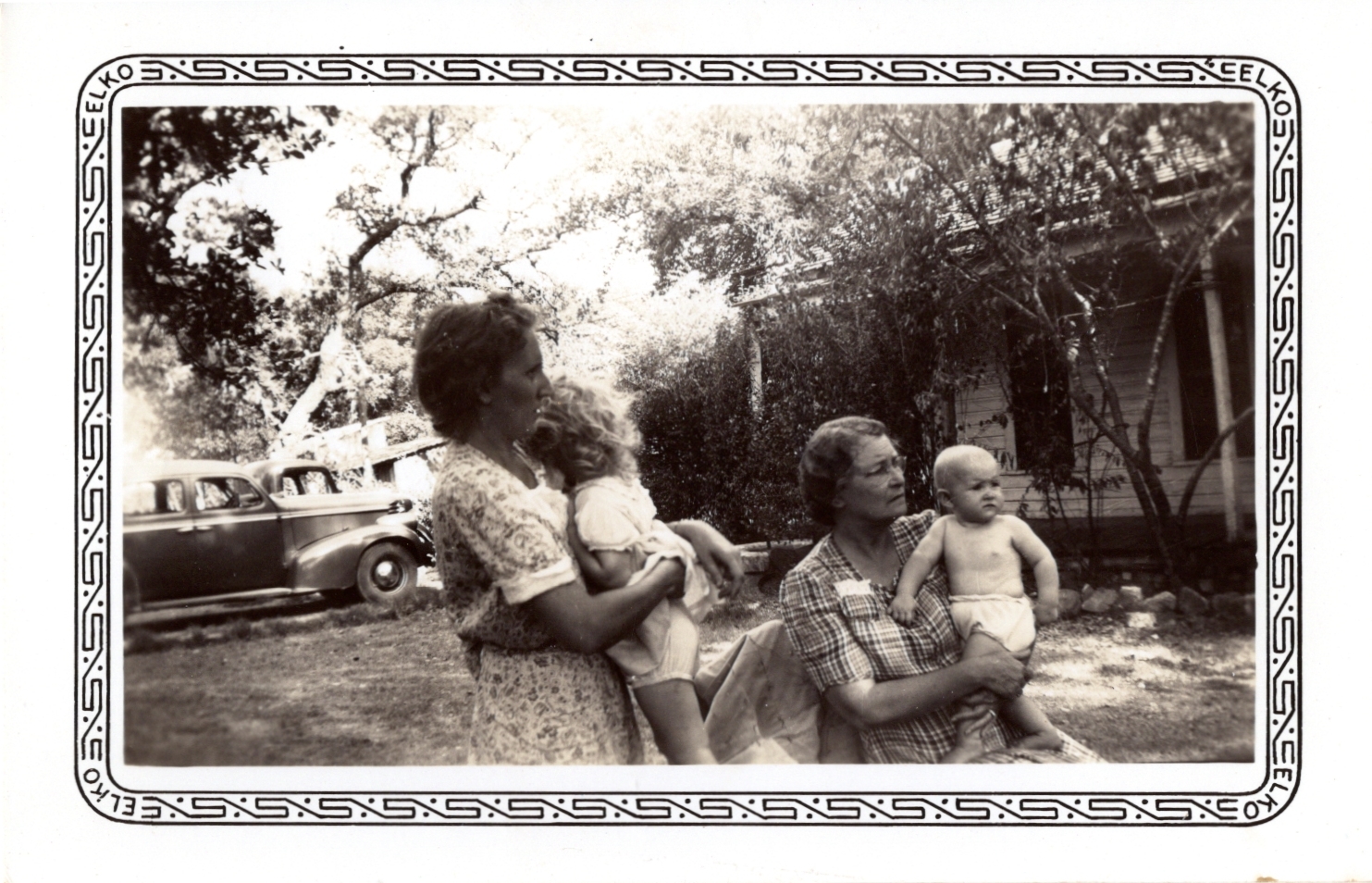
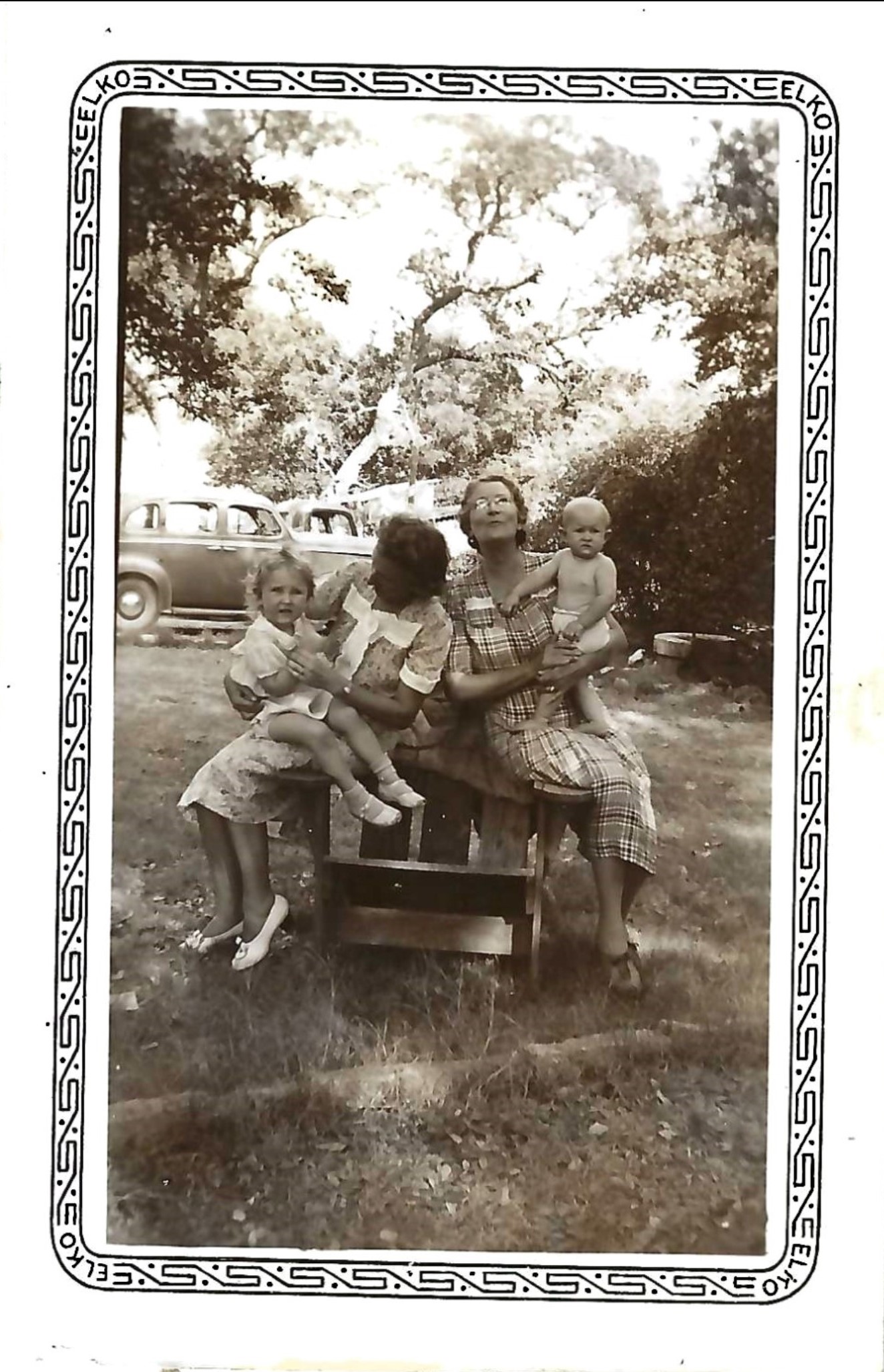
This series of photos is from the Old Home Place, around 1942, judging from how old Aunt Billye is. She’s the tiny one in diapers. And the toddler is my mama, Kay. The older couple are my great grandparents, Jack and Mary (Howard) Adams, The younger couple are Jack Howard and Tut (Edwina Sandberg) Adams, parents of Kay and Billye. The two other men are Jack and Mary’s sons Elzah (in the white shirt) and Earl (in the long sleeve shirt) Adams. I love this series of pics, starting with the random group shot of everyone not yet organized. I can’t imagine trying to wrangle this group. Maybe this was Easter? It was early in the war anyway, before the three boys got sent off in various directions. You can see the curb stones in many of the shots, particularly the ones of Tut and Mary and the little girls, but also lining the driveway behind them and along the flower beds.
So that’s the story of those gray stones around the front flower bed at our house. If anything happens to Sean and I, I hope some Howard descendant will come get them before they have to sell off our house!
P.S. Also, I got the WORST case of poison ivy from picking up those stones. Didn’t even think about it at the time and I’m sure all the obvious poison ivy had been mowed down by that time, but the roots were still in the ground and when we disturbed them the poison-y stuff got all over the stones and subsequently all over me. Luckily I was wearing gloves, but it still got all over my arms and across my belly because of the way I was carrying them. I think I eventually had to get a cortisone shot. Yikes. Worth it though!
P.P.S. I’m experimenting with slideshows, so don’t miss the series of pictures in the two at the end of the post! You can click the little arrows on either side of the photos to advance.
So I thought I wouldn’t have any trouble with this week’s topic. I have a plethora of immigration records for the branches of the family that I can trace. But when I settled on our first Swedish ancestors as my topic it sent me all the way back to the early days of my research and I got caught in a procrastination whirlpool. I was looking at the immigration record for my 3rd great grandparents, Jonas Christersson and Maja Lena Svensdotter and their four children, and in trying to refresh my memory, as well as retrace my steps of probably 15 years ago now, I got stuck on the question of how I knew where to look for them in Sweden.
As I recall, my Aunt Billye was the one who found that ship record (above) showing the family arriving on the Ship Lexington, in Boston, Massachusetts, on September 20, 1853. When I got my Ancestry account in October of 2010, I started compiling all of the information I could about them from what was available, but it was mostly just census records at that point. But sometime that fall Ancestry released the Swedish Church Records. It may have been the reason I started my subscription, but I kinda remember sitting down at my laptop one morning and opening an email annoucement and getting super excited. Prior to that, if you wanted to search those records you had to purchase a DVD set for a princely sum and then you had to know how to find what you were looking for. The records on Ancestry weren’t very user friendly either, and it took me some weeks, with the help of a book that Aunt Billye loaned me, to figure out how to trace our family in those records. But by the next June I had a very detailed story to present at our family reunion. I had found both Maja Lena and Jonas’ families in Sweden, gone back more than a few generations, and traced a few of their siblings, adding some cousins to our family tree who we had always only known as family friends, and realizing that some branches we had thought had only married in were actually fairly close cousins.
But I still can’t remember how I knew where to look! Swedish Church Records are very detailed and if you know the name of the parish a person came from and either the year of their emigration or their birthdate you can find them in the parish Birth Records or what’s called the Moving Out Records and start tracing them through the Household Examination Books. I’ve spent the last week going through all of my primary sources that I would have had available at that time looking for any reference to the fact that Maja Lena was born in Lekeryd, that Jonas and all four of the kids were born in Forserum, or that the family emigrated from Forserum. And I can’t find anything! I also can’t find my research notebooks from those early days. They are somewhere in this house, but — detour! I was sitting here typing and something made me look to my left and there they were! Well, not quite that simple, but I had consolidated some of my genealogy stuff and I didn’t remember where I’d put it till I was sitting at just the right angle to see that shelf. Ah the trials and tribulations of the disorganized. Anyway, it didn’t really help, because even though I found the notebook I’d been wanting, it didn’t shed any light on the question of how I knew where they emigrated from. Sigh.
The good news out of this week of searching is that I’ve been looking through all kinds of boxes and notebooks and files and I happened across some things that I’d always meant to scan. So I’ll share them here instead of hiding them in a to do pile!
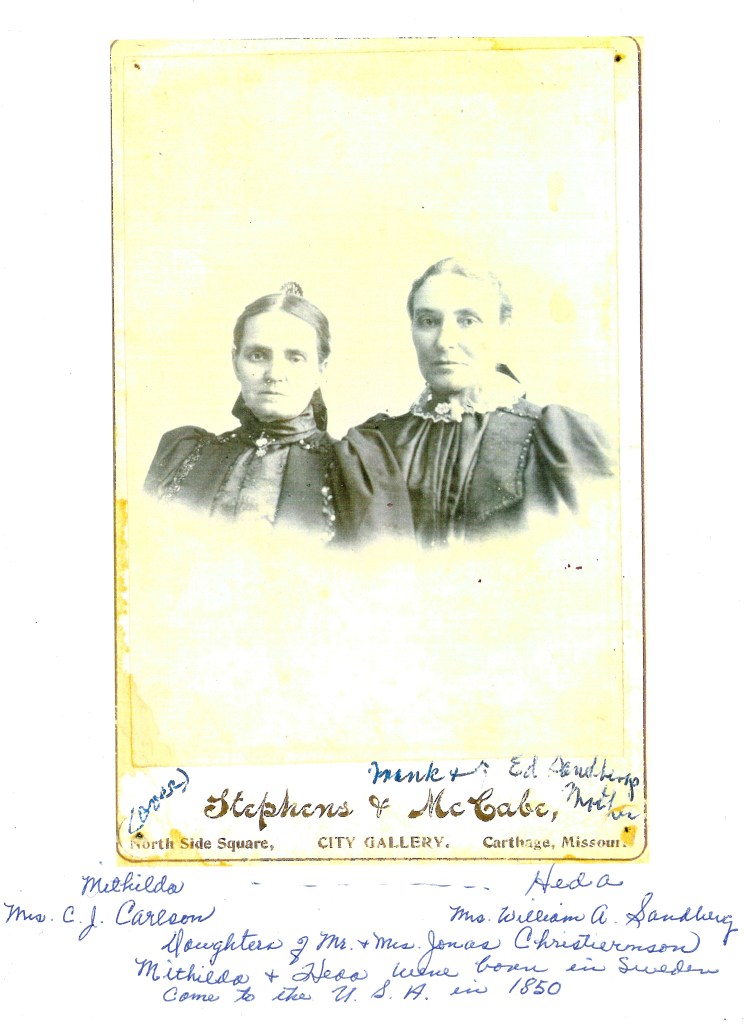
Anna Lena Jonassdotter Christerson Carlson & Hedda Christina Jonassdotter Christerson Mercer Sandberg
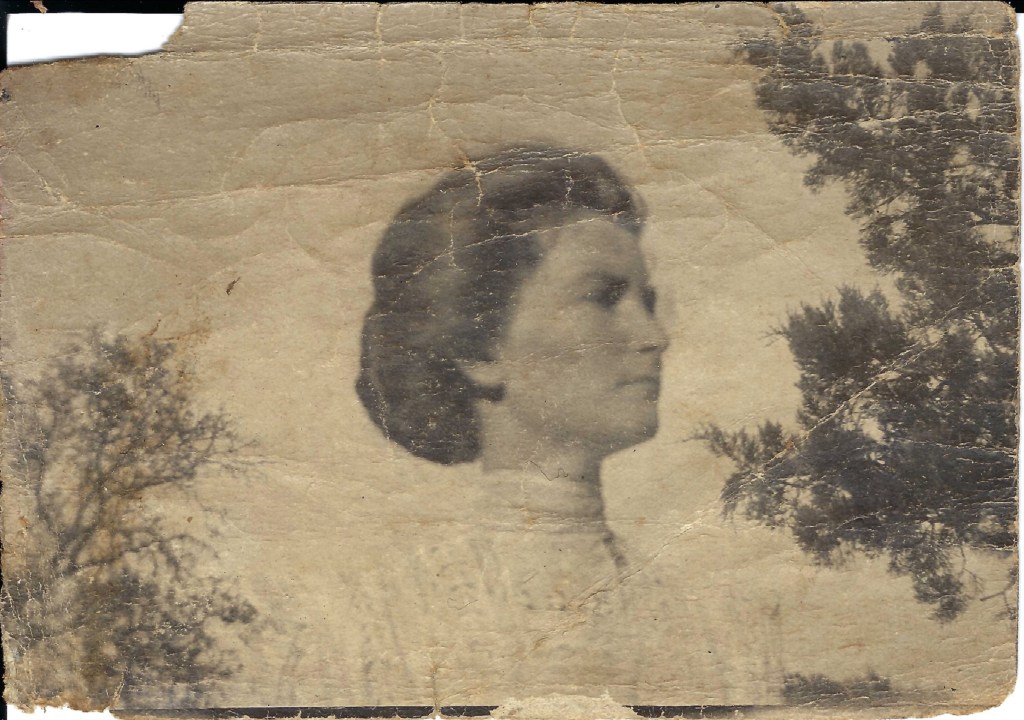
I had completely forgotten about this photo. I’m not entirely sure where it came from and the handwritting is sort of familiar, but I’m not sure whose it is. It is a color copy of a scan of the original and it comes from a collection of old scrapbook pages with lots of other photos that I have seen before and mostly already have in my collection. The note at the bottom says this is a picture of, on the right, our Hedda, my great-great-grandmother. As noted, she was mother to Frank and Ed Sandberg, as well as Hilda and Mart.
The notation for the woman on the left, though, is a little garbled. Hedda had three sisters, Anna Lena, Mathilda, and Adla Suzanna. She also had a brother Sven August. The four older children are listed in the ship record above. Adla Suzanna was born 21 June 1859, after they had been in America for about 5 years. And Maya Lena was 47 when she was born! The notation says that this is Mithilda (spelled wrong all three times) and that she is Mrs C. J. Carlson. I am pretty certain that this is not Mathilda, because she died in 1870 at the age of 18, when Hedda would have been about 25. Neither of these women are that young.
The name Mrs. C. J. Carlson is incorrect, and comes from the description of the family from page 181 of The Swedes in Texas, 1838-1918. Hedda’s oldest sister, Anna Lena, married a guy named John Carlson. I started to tell their story way back in 2018 when I started this blog (link here. I probably ought to get back to that…). So the surname is correct, but the initials are not. But the thing that tells me that this is Anna Lena is the address of the photographer, on the square in Carthage, Missouri. When John left Texas after “the incident” he and the rest of the family ended up in Carthage, Missouri.
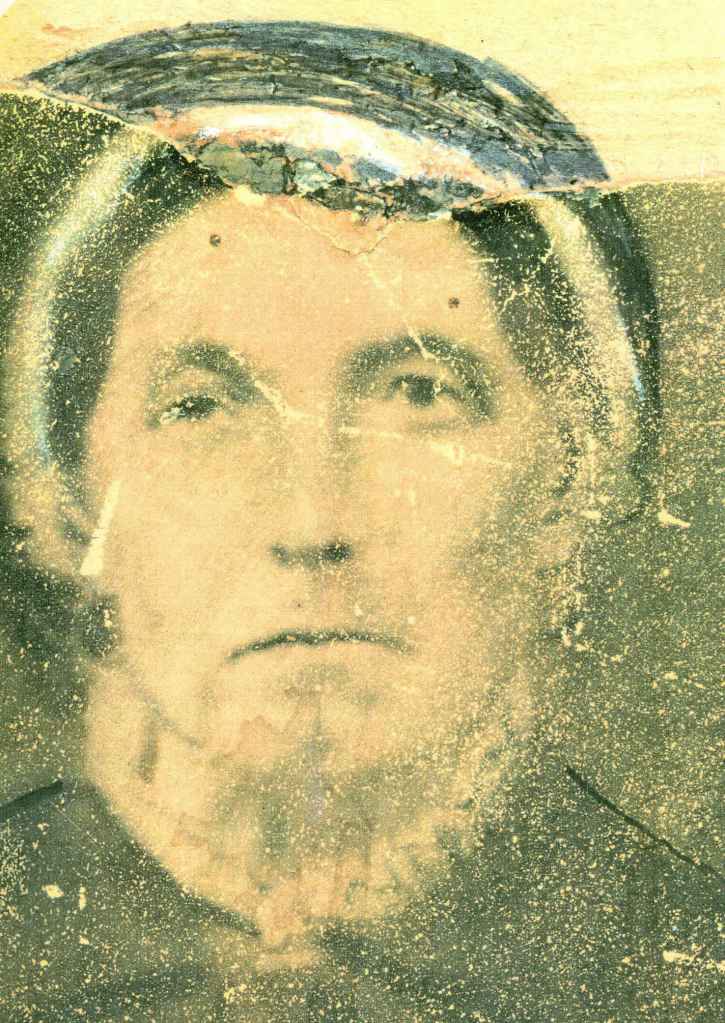
Maja Lena Svensdotter Christerson
Also, she absolutely has her mother’s eyes.
I also found this lovely photo of my great grandmother Mary Belle Howard Adams as a young woman, probably around 1900.
Mary Belle Howard Adams
Paula Jacqueline Sanders & Jack Howard Adams
This cutie-patootie picture of my little sister, Paula, with our Popo Jack, circa 1972.
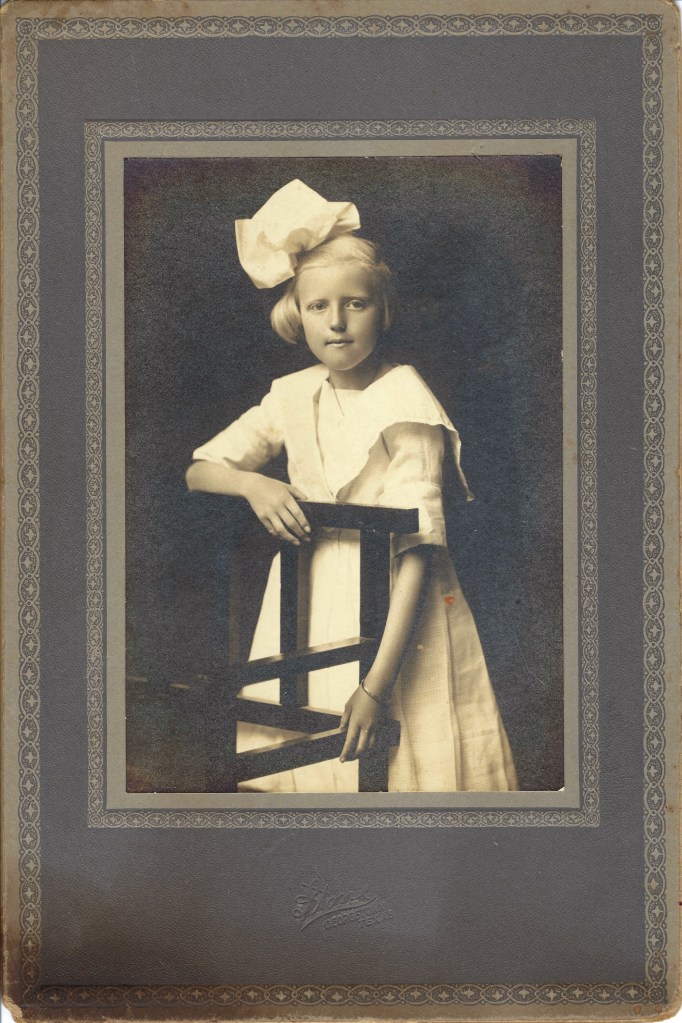
And this wonderful portrait of my great Aunt Flossie. I imagine this must have been right around the time that she and her father and her sister Lillian moved to Texas in 1908.
Florence Anderson
There are lots more where these came from, so I’ll have to plan some scanning time into my weekly schedule and get some more of these shared on here. And hopefully I’ll get myself back on track for next week’s topic, “Heirlooms.” I guess photos count as heirlooms? Don’t they? You might just get more of these!
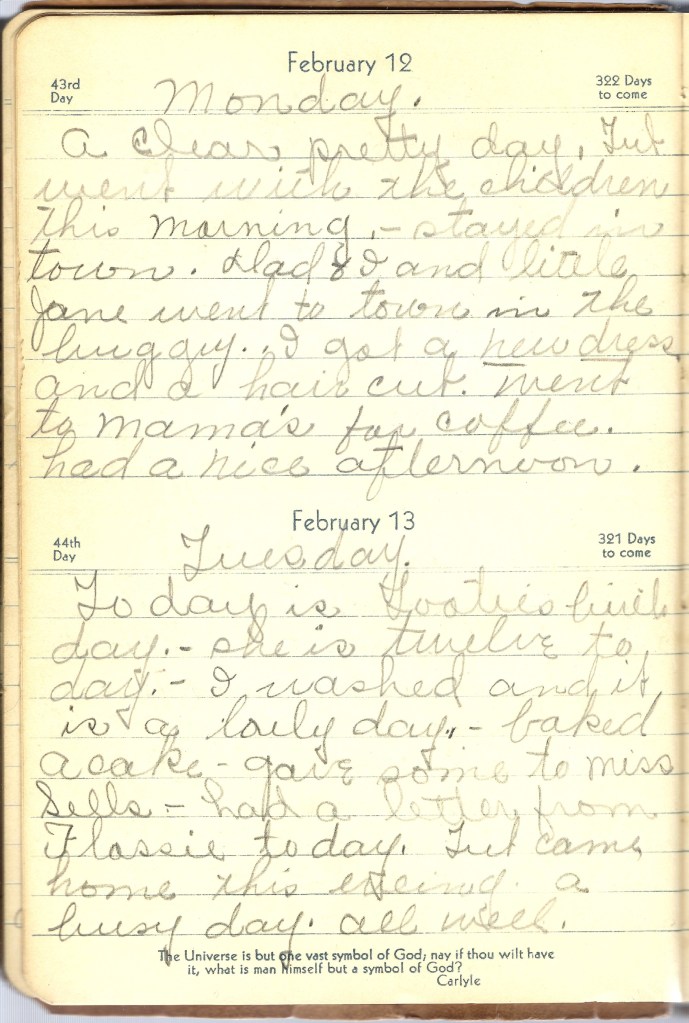
A clear pretty day. Tut went with the children this morning.- stayed in town. Dad & I and little Jane went to town in the buggy. I got a newdress and a hair cut. went to Mama’s for coffee. had a nice afternoon.
February 13
Tuesday
Today is Tooties birthday. – she is twelve to day. – I washed and it is a lovely day.- baked a cake-gave some to Miss Sells-had a letter from Flossie today. Tut came home this evening. a busy day. all well.
February 14
Wednesday.
Valentine day. was asked to Mrs Eric Lundblads to day. there was about 34 ladies there. had a lovely afternoon. Bonnie spent the morning at Mable’s & was at school this evening at Mama Bs for coffee. Tut cleaned house.- all so nice
February 15
Thursday.
Spent part of the day in bed with a headache. walked to Miss Amys this afternoon Saw Aunt Mattie there. rode with Dad home in the wagon.- Bonnie & I went to Aunt Ellens to night had a grand time.- you always do at Ellen’s.
February 16
Friday.
Nothing unusual to day except some more work. We patched my old silk dress and washed it.- it looks real nice.- Tut Bonnie Jane and I were here alone all afternoon talked to Ellen twice to day. Bonnie Jane’s cough is better. in all a nice day.
February 17
Saturday.
Went to Mama Birdies to day. Irene, Mug, Ebba & Alma were there also.- come home and had a nice quiet evening at home. Tud was home also. Jacks eye is still bad.- had more rain. – talked to Ellen to day.
February 18
Sunday.
Cold to day- we dident go to church nor S.S.- were asked to Swen & Almas for lunch had a nice time. Slims Emils & Rays were there. came home and poped corn and fixed cocoa for my little bunch.- this is the first Sun we’ve been gone this year and did we enjoy it.
In Tuesday’s entry, “Tootie” refers to Joyce Sand, later Bloomquist, Mama Birdie and Slim’s daughter (not to be confused with Tuddie, our Aunt Diddie).
I’m curious about the various modes of transportation. She mentions the buggy on Monday and the wagon on Thursday. On Monday, Tut and the children (Tuddie and Bill) go to town, but how? Did they have a car? I know Tut only drove for a few years. She stopped driving after an accident that really scared her and she sometimes regretted that in later years.
Sunshine to day also. We girls were home alone Carl Munson was here for coffee – I cut a dress for me and one for Jane. sewed some. Uncle Emils and Paul were here for ice cream to night Bonnie is almost like herself again.
February 6
Tuesday.
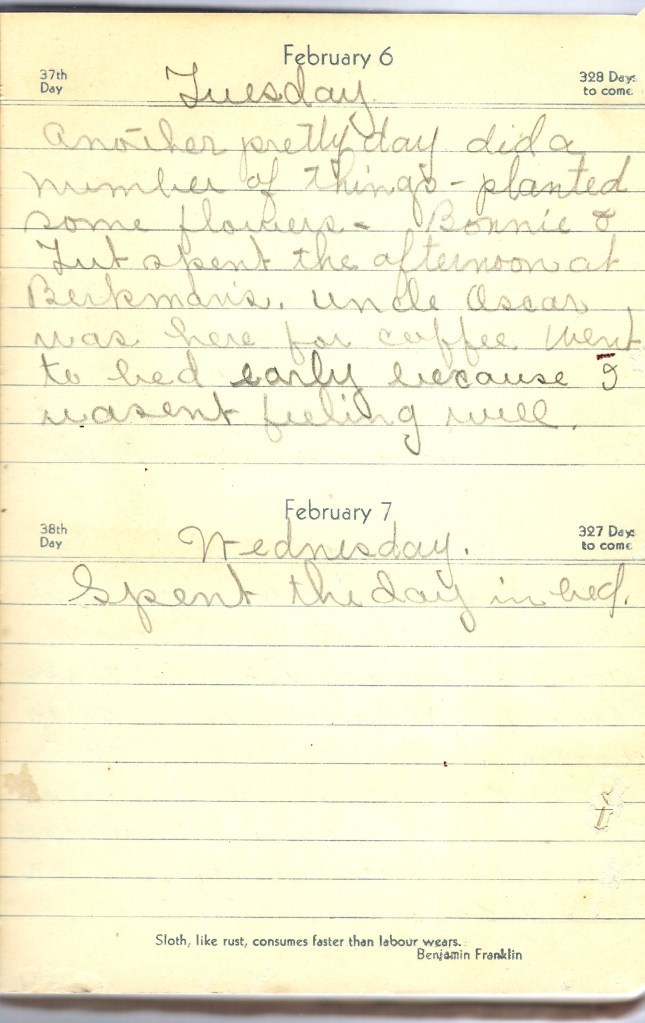
Another pretty day did a number of things – planted some flowers. – Bonnie and Tut spent the afternoon at Berkman’s. Uncle Oscar was here for coffee. Went to bed early because I wasn’t feeling well.
February 7
Wednesday.
Spent the day in bed.
February 8
Thursday.
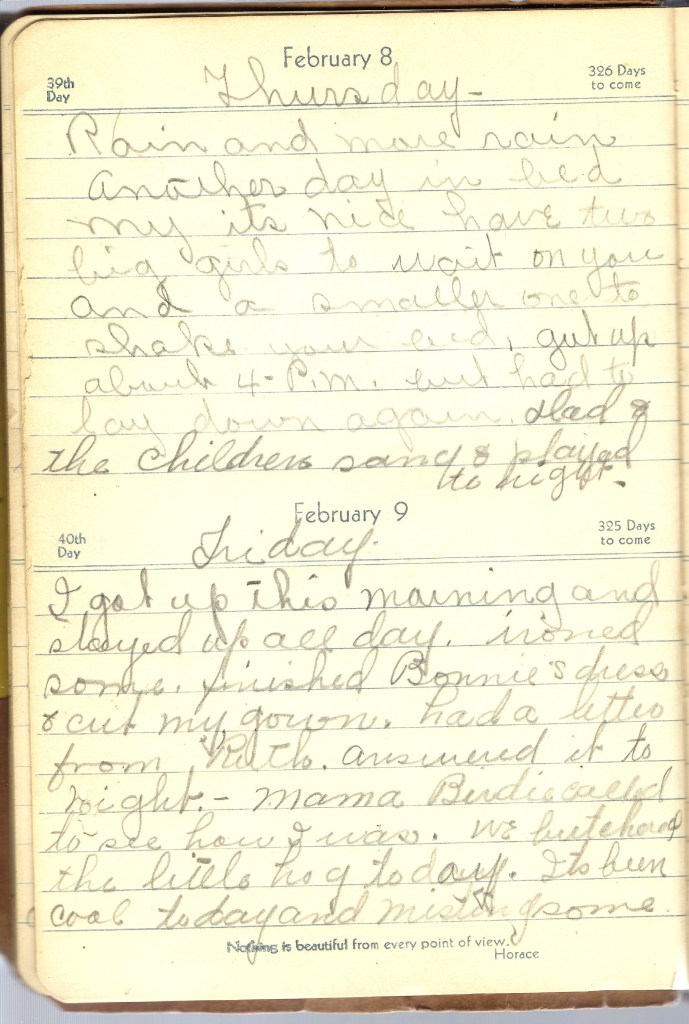
Rain and more rain another day in bed my its nice have two big girls to wait on you and a smaller one to shake your bed. got up around 4 p.m. but had to lay down again. Dad & the children sang and played tonight.
February 9
Friday.
I got up this morning and stayed up all day. ironed some. finished Bonnie’s dress & cut my gown. had a letter from Ruth. answered it tonight.- Mama Birdie called to see how I was. We butchered the little hog today. Its been cool today and misting some.
February 10
Saturday.
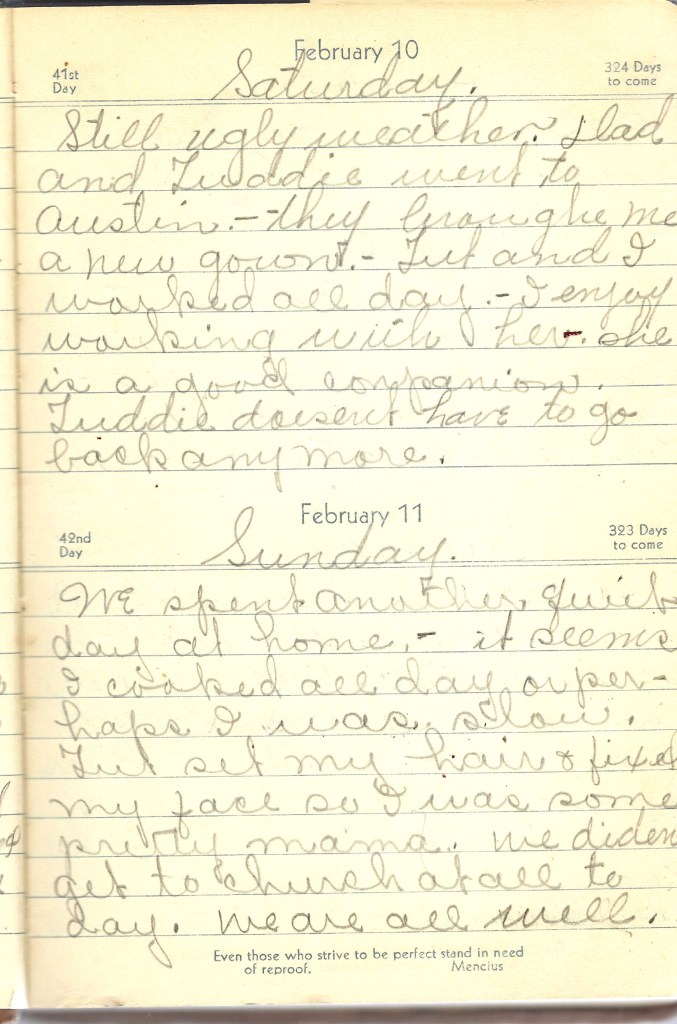
Still ugly weather. Dad and Tuddie went to Austin. – they brought me a new gown. – Tut and I worked all day. – I enjoy working with her. she is a good companion. Tuddie doesn’t have to go back anymore.
February 11
Sunday.
We spent another quiet day at home. – it seems I cooked all day or perhaps I was slow. Tut set my hair & fixed my face so I was some pretty mama. we dident get to church to day. we are all well.
Love that her girls took such good care of her. I also love the comment in the Saturday entry about Tut being a good companion. I can confirm this sentiment. She was lots of fun to hang out with.
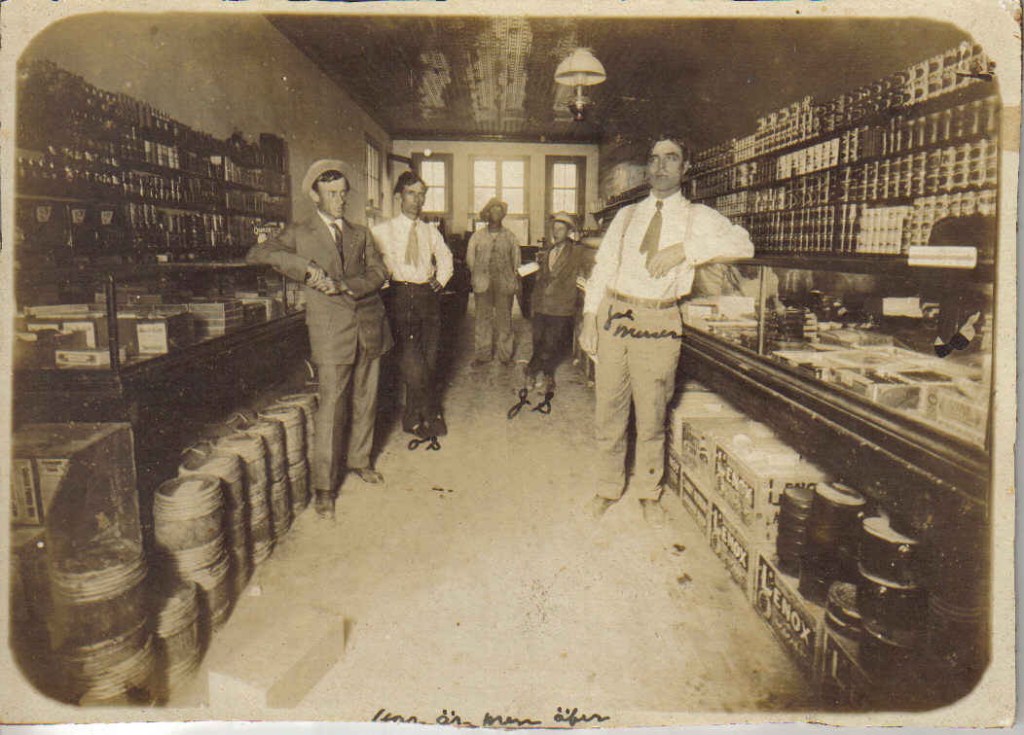
I am really lucky to be blessed with a treasure trove of images that bring the lives of my ancestors to life. The picture above, from around 1909, is of Unknown Guy, Per Oscar Sand, alternately called called P.O. and Oscar, Another Unknown Guy, John “Slim” Sand, and Joe Mercer, in their store on the square in Georgetown, Texas.
Per Oscar Sand is my great-great uncle in-law, father to Irene Irma Sand Lundblad, John “Slim” Sand, and Margaret “Mug” Sand Swenson. He was married to my great-great-aunt Hilda Sandberg on February 11, 1896 (married by her half-brother-in-law August Wallin, a Methodist minister). Their first child, John, afterwards known as Slim, was born May 28, 1896, so, …um, …, their second child, Irene, was born in 1898, their third child, Mug, born in 1900. Hilda died in 1902, and we can assume that with that timeline, she perhaps died in childbirth.
Joe Mercer is the son of Joseph A. Mercer, who I talked about in my post on January 25th, and my great-great-grandmother Hedda Christerson. So that would make P.O. and Joe brothers-in-law. They also became widowers in the same year. Joe and his first wife, Anna Larson, had five children, Paul (1891), Frank (1893), Alma (1895), Joseph (1898), and Mildred (1900), so we can suppose that she also died in childbirth.
I found a number of references in the Texas Posten (this links to a description of the newspaper, which is a great resource, with a little help from Google Translate, for the Swedish Texan community in the early 20th Century.) about Joe working in various retail establishments in Taylor and Georgetown, Texas, including grocers and hardware stores. He always advertises his connection to the Swedish community and the fact that he can speak Swedish. In the fall of 1909, there is a notice in the Texas Posten about Joe and P.O. opening a store together.
“— Messrs. Oscar Sand and Joe Mercer sell groceries as cheap as any in town. When you are offered very cheap prices on groceries, come to us in Fosberg & Anderson’s old location and you will get the same old cheap prices.”
Texas Posten, October 7, 1909, p. 7.
But then there don’t seem to be anymore mentions of the two of them working together. In the fall of 1910, Oscar has teamed up with another fella and they have bought out someone else’s grocery stock and are moving premises
“We have bought Heard & Anderson’s grocery store on the southwest corner of the square, and have moved our warehouse from our old location in the Glascock building to Heard & Anderson’s location, making two stores in one. We want your business and will treat you right. If you pay in cash or if you want to buy on credit, come to us. All kinds of Swedish goods always in stock. Respectful, Oscar Sand, Ben Behrens”
Texas Posten, December 22, 1910, p. 13.
And then, in 1911, Joe went out on his own.
“— Note.—I have bought out the stock of the grocery firm of R. H. Chritzberg, Glasscock building across the street from the post office. I intend to continue the business in the same place and shall gratefully value the trade of my compatriots. Sincerely, Joe Mercer, Phone 343, Georgetown, Texas.”
Texas Posten, August 3, 1911, p. 5
Note to self here: I did some research to see where this Glasscock building might have been, and I think it is in the row of buildings on the north side of 7th Street, just east of the Square. The post office on 8th Street wasn’t built until the 1930s. In the early 1900s the post office was housed in the Masonic Lodge building, the one with the onion dome, on the corner of Main and 7th.
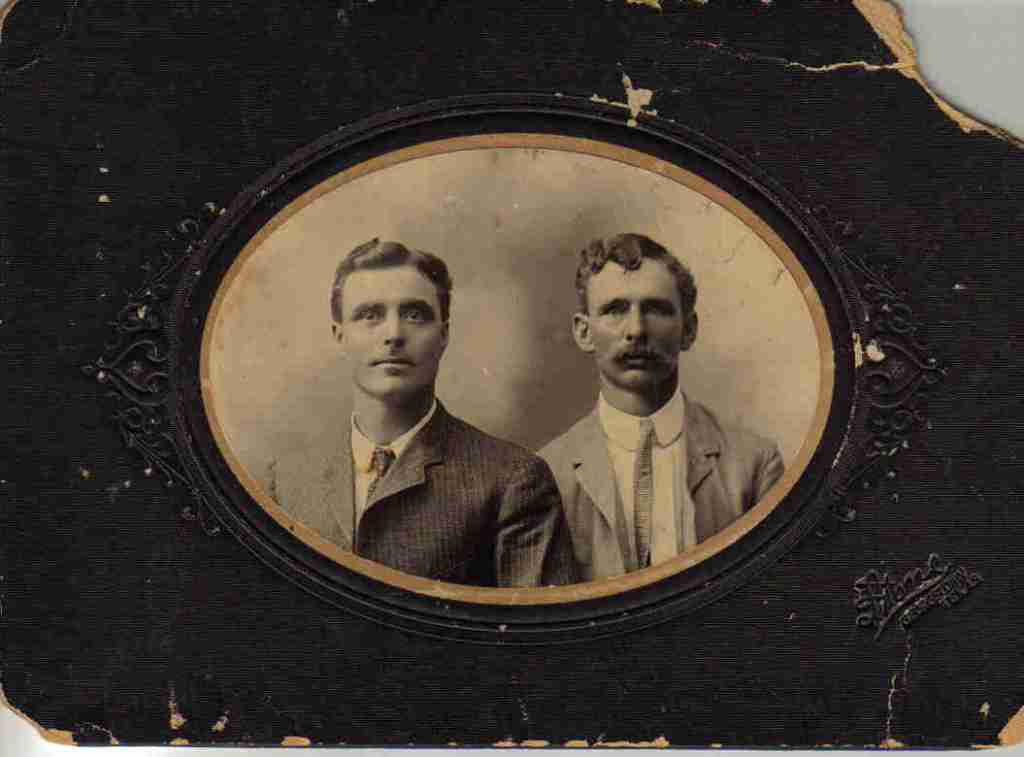
Joseph A. Mercer, Jr and Per Oscar Sand, taken around 1909
I just really love this picture. The two of them look so self assured. And I adore their hair! Especially Oscar’s! In this and other pictures you can always spot him by that curl in the front, the mustache and those ears. And you can always tell it’s Joe by those eyebrows!
I’m so curious as to why their partnership fell apart and what happened in those few years. Before and after this time, Joe, particularly, continues to be employed as a clerk in other people’s businesses. He also appears in census records noting his occupation as a store clerk in groceries. I so appreciate having this visual proof of what he did to earn a living. Thanks, Aunt Diddie, for saving these and others from the burn pile (but that’s a whole nother post!).













 Chasing Swedes